
Just two days after the U.S. Senate passed the GENIUS Act, a major stablecoin bill, Hong Kong's Legislative Council approved its own Stablecoin Bill on May 21. This establishes a licensing regime for fiat-backed stablecoins in Hong Kong, further strengthening the region's regulatory framework for virtual asset activities.
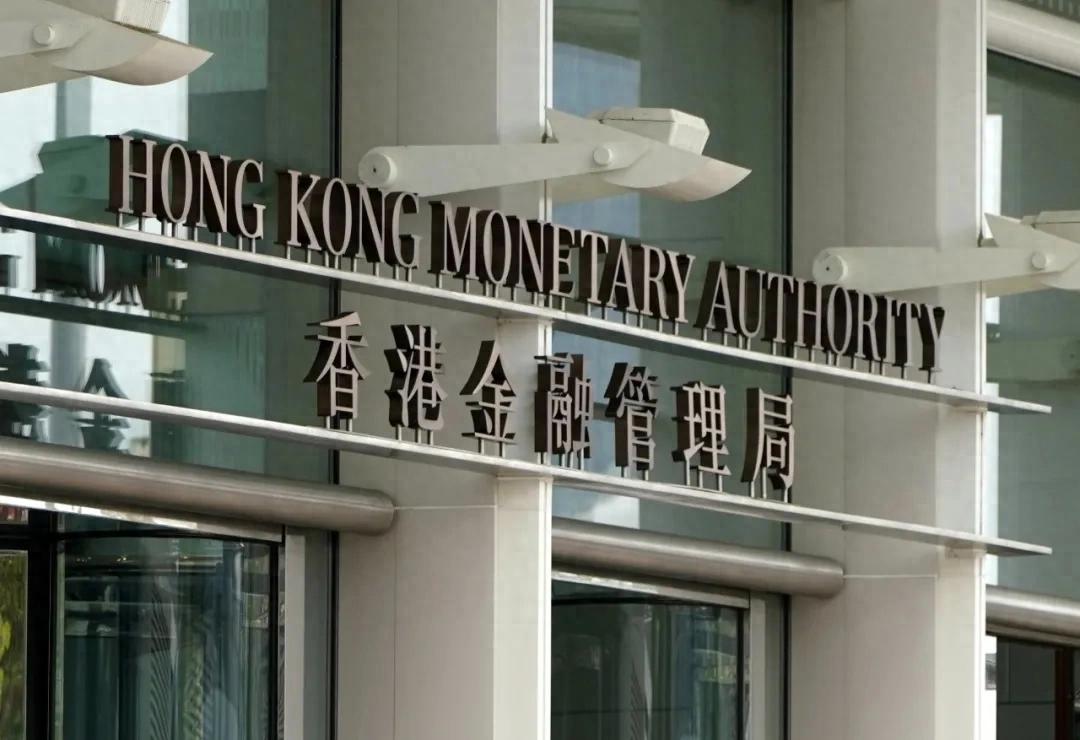
△ As Hong Kong's central bank, the Hong Kong Monetary Authority (HKMA) oversees virtual assets with financial attributes, including stablecoins.
The Hong Kong Government has reiterated its commitment to supporting the virtual asset industry. With regulatory regimes now in place for trading platforms and stablecoin issuers, the Government's next steps will involve consulting on over-the-counter (OTC) virtual asset transactions and custody services, followed by issuing its second Virtual Asset Policy Statement.
Key Provisions: Conditions for Issuing and Selling Stablecoins in Hong Kong
1. Licensing Requirements for Issuers
Under the new Ordinance, any entity issuing fiat-backed stablecoins as part of its business in Hong Kong—or issuing such stablecoins anywhere that are pegged to the Hong Kong dollar—must apply for a license from the Financial Secretary.
Licensed entities will be subject to ongoing supervision. The Financial Secretary holds the authority to temporarily suspend or revoke licenses, as well as impose fines, for violations committed by the licensed entities, their designated stablecoin operations, or senior personnel.
The Ordinance stipulates that only licensed institutions may sell fiat-backed stablecoins in Hong Kong, and only stablecoins issued by licensed entities can be sold to retail investors.
Furthermore, to prevent fraud, only advertisements for licensed fiat-backed stablecoin issuances will be permitted at all times, including during the six-month transition period. The public is advised to remain vigilant when encountering advertisements or information related to fiat-backed stablecoins.
* Three “Sandbox” Participants Still Required to Apply for Licenses
In March 2024, the HKMA launched a sandbox for stablecoin issuers, allowing interested parties to pilot their issuance plans within a controlled, limited scope before the formal legislation took effect.
To date, the HKMA has announced three sandbox participants: JD Coinchain, Circle Technology, and a joint venture formed by Standard Chartered Bank, Animoca Brands, and HKT.
The regulatory sandbox clarifies that participation approval does not constitute an endorsement or regulatory blessing from the HKMA or any other financial regulator. Once the stablecoin issuer licensing regime is formally implemented, sandbox participants must still submit formal license applications to the HKMA.
2. Additional Requirements for Issuers
Issuers must comply with stringent requirements for reserve asset management and redemption. This includes properly segregating client assets, maintaining robust stabilization mechanisms, and processing redemption requests from stablecoin holders at face value under reasonable conditions.
Issuers must also meet a series of requirements covering anti-money laundering (AML) and countering the financing of terrorism (CFT), risk management, disclosure obligations, auditing, and "fit-and-proper" criteria. The Financial Secretary will conduct further consultations on the detailed regulatory requirements as needed.
Specifically, according to the Legislative Council Background Brief, key licensing criteria for stablecoin issuers include:
(a) Reserve Asset Management and Stabilization Mechanism: The market value of designated stablecoin reserve assets must always be at least equal to the face value of outstanding stablecoins. Licensees must implement a sound stabilization mechanism, maintain proper segregation and management of reserve assets, and adopt adequate disclosure policies;
(b) Redemption: To protect holders, licensees must redeem valid requests at face value without imposing unduly burdensome conditions or unreasonable fees. Redemption procedures, timelines, applicable conditions or fees, and holder rights must be clearly disclosed;
(c) Physical Presence in Hong Kong: To enable effective supervision, licensees must maintain a physical entity in Hong Kong;
(d) Financial Resources: Licensees must possess sufficient financial resources to operate, including a minimum paid-up capital requirement of HK$25 million;
(e) Fit-and-Proper Criteria: Controllers, Chief Executive Officers, and directors of licensees must be fit and proper persons; personnel managing regulated stablecoin activities must possess the requisite knowledge and experience; and
(f) Prudential and Risk Management: Licensees must establish appropriate risk management policies and procedures commensurate with their operations' scale and complexity. They must also maintain sound control systems to prevent money laundering and terrorist financing.
3. Transitional Temporary Licenses
The Stablecoin Ordinance is expected to take effect within 2025, giving industry participants time to understand the new requirements.
The regime includes a six-month transitional arrangement, but only for issuers who submit their license applications to the Financial Secretary within the first three months after the regime becomes effective:
(i) Submit a license application;
(ii) Receive written notification from the Financial Secretary; and
(iii) Commit to complying with all applicable regulatory requirements.
Existing issuers meeting these criteria—and able to demonstrate their capacity to comply—will be granted a temporary license. This allows them to continue issuing stablecoins until the Financial Secretary makes a final decision on their application. If the Financial Secretary determines an applicant cannot meet the criteria, it may issue a rejection notice at any time. Upon receiving a rejection, issuers must wind down operations in an orderly manner within one month.
Existing issuers who fail to meet the above criteria must wind down their operations by the end of the fourth month following the regime's effective date.
4. Eligibility to Sell Stablecoins
To safeguard the public, only the following institutions—regulated by the Financial Secretary or the Securities and Futures Commission (SFC)—may sell stablecoins:
(a) Licensed fiat-backed stablecoin issuers;
(b) SFC-licensed virtual asset trading platforms;
(c) Corporations licensed by the SFC under Section 116 of the Securities and Futures Ordinance to carry out Type 1 (dealing in securities) regulated activities; and
(d) Authorized institutions as defined under the Banking Ordinance.
Global Stablecoin “Arms Race”
In 2023, the Financial Stability Board (FSB) finalized its recommendations for regulating stablecoins. These recommendations call on member jurisdictions' financial regulators to supervise stablecoin activities within their territories to address potential risks to financial stability. The FSB will review implementation progress across its member jurisdictions—including Hong Kong—in 2025.
(Starlabs Consulting Note: Established in 2009, the FSB coordinates work among international financial regulators and standard-setting bodies. Mainland China and Hong Kong are both FSB members.)
Jim Reid, Head of Global Macro and Thematic Research at Deutsche Bank, noted in a recent report that stablecoins are expanding at an unprecedented pace, and corporate finance executives are already feeling the impact.
Deutsche Bank's report identifies four primary types of stablecoins:
Fiat-currency-backed stablecoins (the type covered by Hong Kong’s bill, including $USDT, $USDC, and $BUSD);
Asset-backed stablecoins (e.g., $PAXG, $DGX);
Crypto-collateralized stablecoins (e.g., $DAI, $sUSD); and
Algorithmic stablecoins (e.g., $UST, $FRAX).
Deutsche Bank notes that USD-backed stablecoins currently dominate the market: over 99% of stablecoin market capitalization is pegged to the U.S. dollar. These stablecoins hold more than $120 billion in USD-backed assets, effectively functioning like money market funds that support the U.S. short-term debt market. For instance, as of March 2025, Tether held $98.5 billion in U.S. Treasury securities—a figure near zero in 2020—making it one of the largest foreign holders of U.S. Treasuries.
A Citigroup report states that the U.S. dollar remains dominant in foreign exchange reserves. The dominance of USD stablecoins stems not only from the dollar's first-mover advantage but also reflects its "exorbitant privilege" as the preferred reserve currency. The stablecoin market holds enormous potential: Citigroup estimates it could reach $1.6–$3.7 trillion by 2030.
United States: Two Stablecoin Bills Under Legislative Consideration
On May 19, the U.S. Senate passed the "Guiding and Establishing National Innovation for U.S. Stablecoins Act of 2025" (GENIUS Act) by a vote of 66–22. This marks the first comprehensive federal regulatory bill targeting stablecoins in U.S. history, moving them out of a longstanding regulatory gray area.
The GENIUS Act focuses on stablecoin issuance and circulation. It establishes several key requirements for issuers, including a mandate to hold reserve assets equal in value to their issued stablecoins, prioritizing repayment to stablecoin holders in bankruptcy, and complying with AML regulations and counter-terrorism sanctions.
Standard Chartered's latest research forecasts that once the GENIUS Act is enacted, stablecoin supply will grow nearly tenfold over the next four years—from $230 billion today to approximately $2 trillion by the end of 2028.
According to Tether's Q1 2025 Transparency Report, $USDT is the largest stablecoin by market cap (approx. $130 billion), with ~60% of its reserves in U.S. Treasury bills and ~40% in cash and equivalents. Analysts believe Tether already meets the GENIUS Act's requirement for U.S. Treasury-dominated reserves, and its quarterly audits satisfy transparency standards. However, a key challenge lies in adjusting its business model to align with regulatory expectations, given $USDT's historical associations.
Separately, Circle's May 2025 report indicates $USDC's market cap is approximately $60 billion, with 80% of its reserves in short-term U.S. Treasuries and 20% in cash. Circle is already U.S.-registered and actively cooperating with regulators. Upon the GENIUS Act's enactment, $USDC may become the preferred stablecoin for institutional users—especially in DeFi, where it already accounts for 30% of stablecoin usage—potentially increasing its market share further.
In addition, on April 2, the U.S. House Committee on Financial Services passed the "Stablecoin Transparency and Accountability for a Better Ledger Economy Act" (STABLE Act) by a vote of 32–17. This Republican-backed bill aims to establish rules specifically for payment stablecoins.
Europe: MiCA Drives Adoption of Euro-Backed Stablecoins
Although the euro holds significant weight in traditional finance, accounting for 20%–30% of global forex reserves, SWIFT transactions, and trade flows, it represents less than 0.5% of global stablecoin circulation.
However, with the Markets in Crypto-Assets Regulation (MiCA) framework fully in effect since late 2024, euro-backed stablecoins have become a key growth driver in Europe's crypto market. MiCA provides a detailed legal framework for stablecoin issuance and trading.
In November 2024, monthly trading volume for euro stablecoins surged to nearly €800 million—the highest level in years. Reports from Kaiko and Bitvavo attribute this largely to Banking Circle’s $EURI, which gained traction after listing on Binance. Other MiCA-compliant stablecoins, including Circle’s $EURC and Société Générale’s $EURCV, also contributed, collectively capturing 91% of the euro-backed stablecoin market by end-2024.
Citigroup cautions that since euro stablecoins launched under MiCA, non-USD stablecoin market caps have increased—coinciding with a weakening U.S. dollar. Although euro-based stablecoins are still a small market segment, their development may serve as a leading indicator of shifts in the U.S. dollar's global standing.
Now, USD stablecoins face new competition from stablecoins potentially backed by the Hong Kong dollar and/or the Chinese renminbi. Hong Kong Legislative Council member Gary Wu previously stated that stablecoin issuance in Hong Kong should be grounded in practical use cases, which could extend to offshore RMB- or even euro-backed stablecoins, not just HKD.
Source: Starlabs Consulting