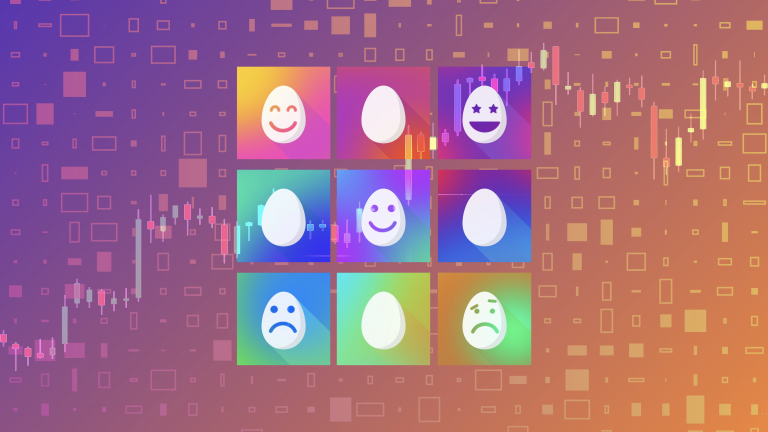

Cryptocurrency traders need to cultivate several fundamental skills to master the market: the ability to assess fundamentals in context, perform technical analysis to determine entry and exit price levels, and control emotions to make optimal trading decisions.
This relates to trading psychology, which requires traders to manage their emotions, think quickly yet deliberately, and strengthen discipline to execute well-designed trading strategies. Weak emotional control can lead to irrational trades, deviations from the trading plan, and exceeding previously established risk/reward ratios.
Controlling emotions sounds easy, but even the most experienced crypto traders still struggle to keep emotions in check and prevent fear and greed from taking over.
Common Emotions Affecting Trading
Fear is a common emotion that often leads crypto traders to make poor trading decisions. It can manifest in two ways: either fear takes over during a sudden downturn, causing traders to close positions early, or fear of a pullback after a rally leads to the same decision, prematurely closing trades.
Greed often causes traders to exceed the risk/reward ratio they are actually willing to accept. Once you start eyeing trades that could be big winners compared to your previous moves, greed is likely to take control of your strategy and lead to significant losses—even wiping out profits carefully accumulated over time.
Overconfidence is greed's twin brother and does little good for a crypto trader trying to achieve consistent profitability. Just because you are performing well, whether due to executing a sound trading strategy under the right market conditions or pure luck, does not mean you can let your guard down. Once you become overconfident, you will start making larger trades and chasing ever bigger gains.
Some excitement in life is fine, but not when trading cryptocurrencies. As many seasoned traders say, "Trading should be more like watching paint dry. If you want excitement, take your money to the casino." While it feels good to see a trading plan succeed, chasing thrills is a misguided motive when trading in the crypto market. You will end up losing more than you gain, leading to deeper trouble as you try to recover lost profits.
How to Control Emotions
To be honest, it is difficult to completely control your emotions, but what you can do is reduce their impact on trading activities by setting rules, plans, and mechanisms before entering a trade.
1 Reduce Trade Size
The simplest way to lower the intensity of trading emotions is to reduce your trade size. If you set a rule that you never trade more than a certain percentage of the available funds in your account, you will decrease the weight of each trade and spread it across several positions. By having varying levels of risk exposure at different price points, you won't let fear of market events affect your decisions. Additionally, if you need some capital to avoid margin calls, keeping resources in your account to cover short or long positions is always helpful.
2 Set Stop-Loss and Take-Profit Orders
Before you enter a trade, calculate how much you are willing to lose if the trade does not go as expected. Then compare this to the potential reward. If the trade is worthwhile, it helps to place stop-loss and take-profit orders when you initiate the trade. By doing this in advance, you essentially avoid having to make decisions when the market moves against or in your favor. You have already set it up; now you just need to let it play out. Some traders prefer to use automated trading strategies to further reduce their active involvement.
3 Develop a Trading Strategy and Stick to It
Whatever your trading strategy is, stick with it. Do not increase your bets after a few good moves, risking more capital than initially set. Additionally, it takes a long time to verify whether a strategy is effective. If you deviate from the strategy, you cannot know if you are on the right track. When you do incur some losses, you are likely to switch strategies again, placing random orders to chase losses. Of course, you may need to change your trading strategy at times, but only when market conditions change—not just because a few trades did not work out.
4 Accept Losses
It is important to recognize that losses are part of trading. This is not just about cutting losses short. It truly means you should realize that most traders suffer losses, and even the best traders win only 6 out of 10 times. Wanting to profit from every trade will only make you anxious when a trade turns bad. That is when you start making decisions outside your plan. If you have the right trade size, a strategy in place, defined risk and reward levels, and stop-loss and take-profit orders set, all you need to do is let the trade run.
The above strategies may sometimes work, but they may also fail. However, regularly analyzing, summarizing, and refining your strategy can improve your crypto trading skills.