
Author: Mary Liu
Source: BitpushNews
On Wednesday afternoon Eastern Time, the U.S. Federal Reserve raised its benchmark interest rate by 25 basis points, a move markets had widely expected. The hike brings the Fed's target range to 4.5%–4.75%, its highest level since October 2007.
In its Wednesday statement, Fed officials acknowledged that "inflation has eased" and notably omitted any mention of upward price pressures from the Russia-Ukraine war—a clear signal that bolstered investor hopes for a policy shift. Financial markets reacted immediately. According to BitpushNews terminal data, the Nasdaq Composite Index jumped 2% to close at 11,816.32, while the S&P 500 gained 1.05% to finish at 4,119.21. Bitcoin surged to $23,691 following the announcement and was up 3.31% over 24 hours at the time of writing. Ethereum, the second-largest cryptocurrency, saw similar gains, trading around $1,630.
Inflation Remains Elevated
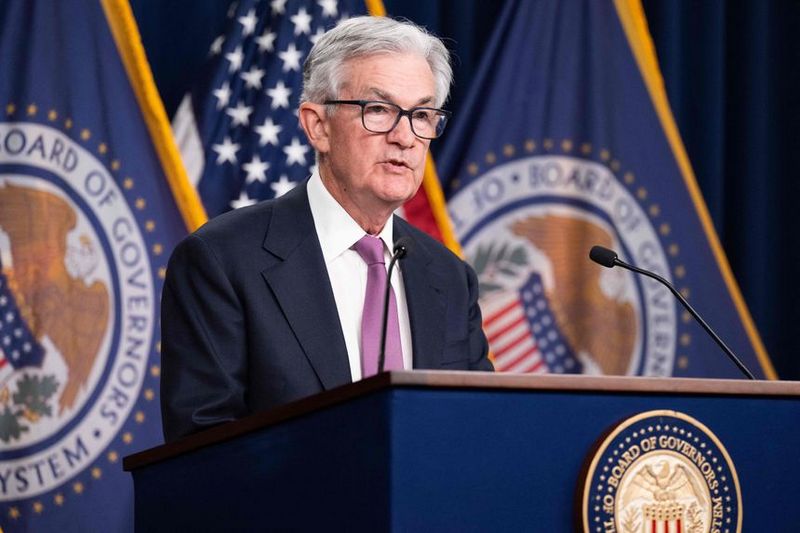
However, the central bank stopped short of signaling a pause. The statement noted that "further increases in the target range will be appropriate," adding that future decisions would depend on factors like the cumulative effect of past hikes, the lagged impact of monetary policy, and evolving financial and economic conditions. In his post-meeting press conference, Chair Jerome Powell struck a hawkish tone from the start, warning of the damage caused by high inflation and reiterating the Fed's commitment to bringing it back down to 2%.
Since June, the U.S. Consumer Price Index (CPI) has fallen month-over-month, with its annual rate now at 6.5%, down from 7.1% in November. Similarly, the Personal Consumption Expenditures (PCE) price index has also dropped, declining from a 6.8% year-over-year pace to 5%. However, the Federal Reserve has cautioned that not all indicators are trending downward.
Powell noted: "We are actually seeing disinflation in the goods sector, which is a positive sign. However, core services excluding housing have yet to show any meaningful decline."
The Fed Signals More Rate Hikes Ahead, But at a Slower Pace
The Fed's latest statement signaled that further rate increases are likely, with policymakers now focused on the "extent" of future hikes. This points to another 25-basis-point increase at the March meeting, with the door left open for a similar move in May.
The Federal Open Market Committee (FOMC) stated in its report: "The Committee anticipates that ongoing increases in the target range will be appropriate in order to attain a stance of monetary policy that is sufficiently restrictive to return inflation to 2 percent over time."
In December, Fed officials projected the benchmark rate would climb to a range of 5.0% to 5.25% in 2023, higher than the current 4.5% to 4.75% range following the latest hike. Some economists worry that smaller, incremental hikes could make it challenging for the Fed to reach its projected target.
In a statement, Vanguard Group analyst Joe Davis noted, "If inflation continues to ease, achieving the 5–5.25% target range with two more 25-basis-point hikes could prove challenging."
At Wednesday's press conference, Powell stated that the Fed's terminal rate "will certainly be higher than our current record."
Fed Expects Slower U.S. Growth in 2023, But No Recession
Powell indicated that most FOMC members do not foresee a recession this year.
He emphasized during the press conference: "While individual forecasts vary, the consensus points to persistently sluggish growth and some softening in the labor market—not a recession. Growth will remain quite low this year, but other factors are at play."
He pointed to positive international economic conditions, a boost in consumer confidence from disinflation, and state and local governments that are "flush with cash."
The latest FOMC statement suggests the economic fallout from COVID-19 and the war in Ukraine is receding, a notable shift from the language used in December.
Following contractions in the first half of 2022, U.S. GDP rebounded with annualized growth of 3.2% in Q3 and 2.9% in Q4, bringing full-year growth to 2.1%. Economists point to sustained growth over multiple quarters as a key indicator of a soft landing.
"The Federal Open Market Committee is very likely engineering a soft landing for the economy, which would be characterized by steady growth over several quarters," wrote Boston College economist Brian Bethune in an analysis.
Market Reaction vs. The Fed's Message
U.S. equities and crypto markets dipped initially on the news before recovering. While some analysts viewed the Fed's stance as slightly dovish, a clear disconnect persists between the market's interpretation and the central bank's intended message.
CoinShares Head of Research James Butterfill noted on Twitter: "Nothing in today’s Fed statement is truly new for markets. Powell tried to sound tough by saying the job isn’t done, but the market isn’t convinced."
Charlie Ripley, Senior Investment Strategist at Allianz Investment Management, told CNBC that the Federal Reserve's rate-hiking cycle is nearing its end. Once the hikes conclude, he expects the central bank to "hold steady and let the economic data catch up to policy." He added, "The Fed's messaging seems contradictory—suggesting more hikes could be appropriate while also signaling they'll weigh further tightening in future decisions."
Ronald Temple, Chief Market Strategist at Lazard, noted: "The FOMC statement leaves the door open for further rate hikes, yet markets are only pricing in one more increase. Given today's near-record-high job openings data, I believe the market remains too dovish on both the peak level of rates and how long they'll stay high. Any significant pushback from markets will likely only encourage the Fed to maintain its tightening stance."