

Galaxy Digital, often called the "Goldman Sachs of crypto," has released its fiscal 2019 annual report. A review of the company's reports from the past two years reveals a stark contrast between its prestigious reputation and its bleak operational performance.

The company's founder, Mike Novogratz, is a Wall Street veteran. A former Goldman Sachs partner, he later served as Chief Investment Officer at Fortress Investment Group. When Fortress went public in 2007, Novogratz cashed out a significant fortune, cementing his status as a prominent figure. However, the macro hedge fund he managed suffered heavy losses during the global financial crisis and was eventually liquidated. Novogratz spent the following years as an individual investor, remaining in the media spotlight.
Galaxy Digital launched in November 2017, at the peak of the Bitcoin bull market. From the outset, it was hailed as a symbolic bridge between traditional finance and the crypto world. This reporter attended CoinDesk's Consensus Invest conference in New York that same month, where Novogratz delivered a rousing, bullish speech on Bitcoin.
After its launch, Galaxy Digital raised capital from private investors, reportedly reaching a valuation of $1.4 billion. The company then went public on a Canadian exchange in August 2018, raising a total of $700 million across two funding rounds. It expanded its team to over 100 employees, many recruited from top Wall Street firms.
Those past glories are now a distant memory. A look at Galaxy Digital's 2018 and 2019 financial statements paints a picture of a company taking on water from multiple leaks, all while its senior executives continue to draw hefty salaries.
Sky-High Costs, Stagnant Revenue
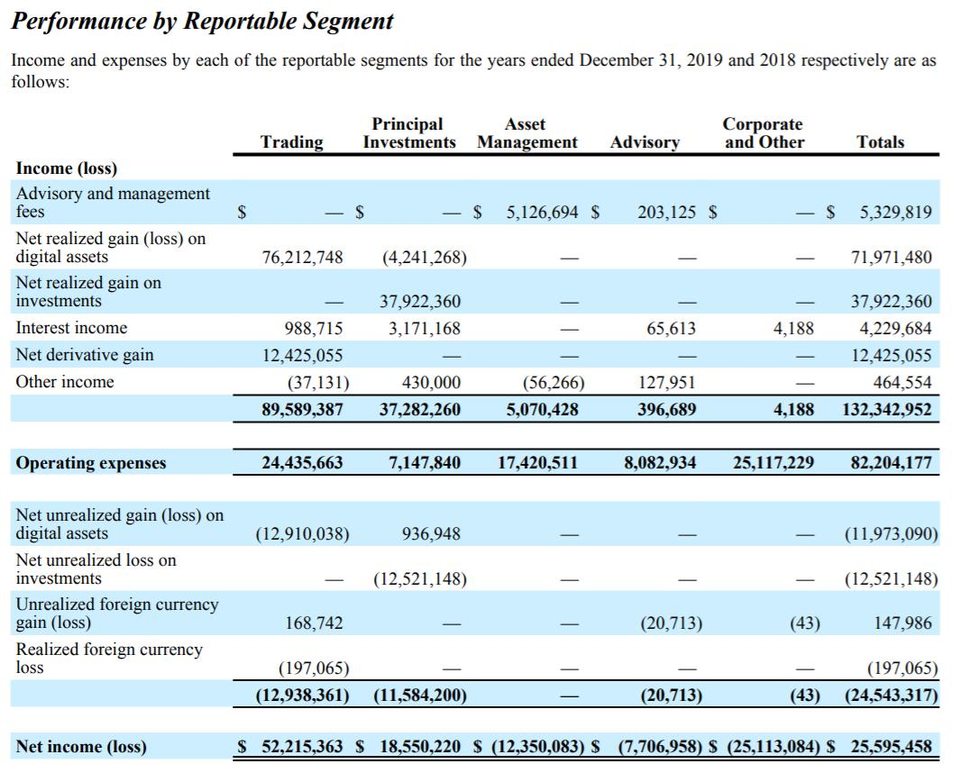
Galaxy Digital 2019 Annual Report
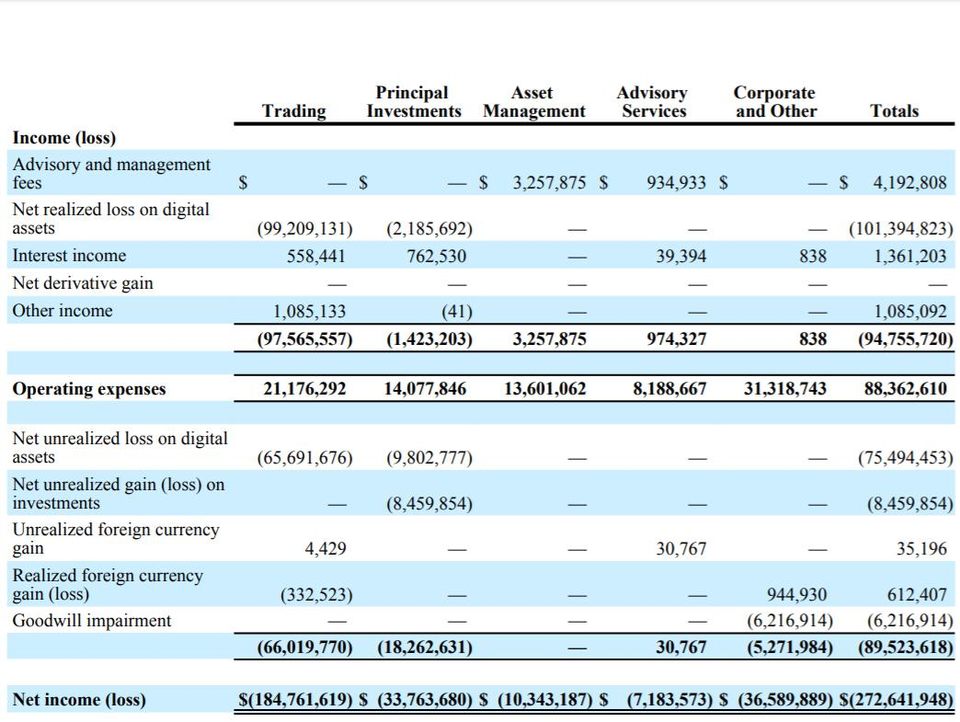
Galaxy Digital 2018 Annual Report
The first thing that stands out in the financials is Galaxy Digital's exorbitant operating costs. In 2019, the company spent $82 million on operating expenses against just $25 million in net revenue. The previous year was even worse, with $88 million in operating expenses and net losses ballooning to $270 million.
For context, the Ethereum Foundation—often criticized for its spending and management—operates on an annual budget of only $30 million.
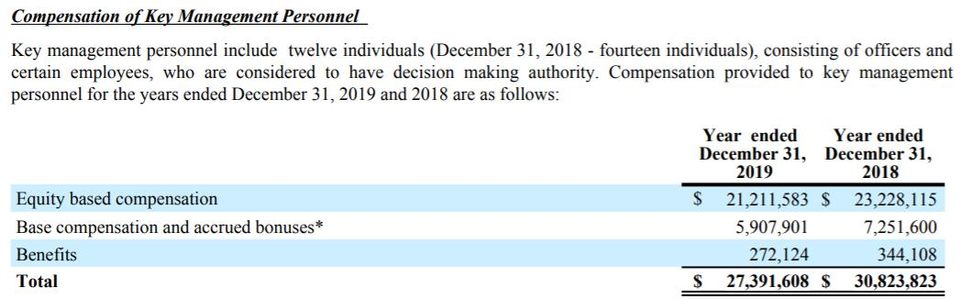
Galaxy Digital Executive Compensation (2018 & 2019)
Despite the dismal performance and massive losses for investors in 2018 and 2019, Galaxy Digital's executives took home a combined $57 million in compensation.
To make matters worse, these high costs haven't translated into sustainable revenue. The company lists trading, investment, asset management, and consulting as its core businesses, with additional costs categorized under "Corporate-related."
Galaxy Digital's trading business lost $180 million in 2018 but generated $52 million in revenue in 2019. This swing was due to the company buying cryptocurrencies near the 2018 market peak, then writing down their value to bear-market lows by year-end. During the 2019 rebound, Galaxy Digital sold portions of its crypto holdings and other investments—including most of its stake in Block.one. These post-rebound sales formed the core of its 2019 revenue and "profit."
The asset management business brought in $3 million in revenue against a $10 million net loss in 2018. In 2019, revenue inched up to $5 million, but net losses widened to $12 million.
The consulting business earned $970,000 with a $7 million net loss in 2018. In 2019, revenue dropped to $390,000, and net losses hit $7.7 million.
Clearly, neither of these two divisions is on track to become profitable anytime soon. Instead, they continue to drain the company's cash reserves.
So, can Galaxy Digital's investment business come to the rescue?
Heavy Losses on Pantera Investment Raise Liquidity Fears
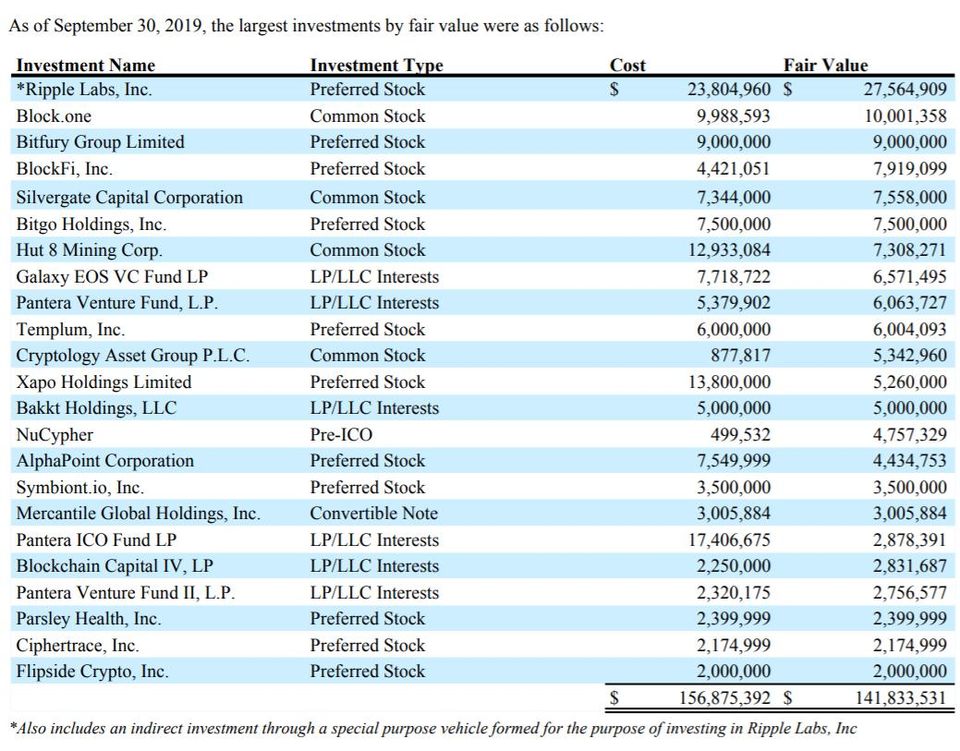
Galaxy Digital 2019 Annual Report – Investment Assets
According to the 2019 financials, Galaxy Digital's on-balance-sheet investment assets have a cost basis of $150 million and a current fair value of $140 million. The bulk of the loss comes from its investment in the Pantera ICO Fund, which cost $17 million but now carries a fair value of just $2.8 million—an 83% plunge.
On paper, this loss appears relatively modest. However, primary-market valuations adjust more slowly than secondary-market prices, casting doubt on the true value and liquidity of these investments. The sharp devaluation of the Pantera ICO Fund is a telling indicator of the current market value for such primary-market holdings.
Unrealized Crypto Losses and Dwindling Cash
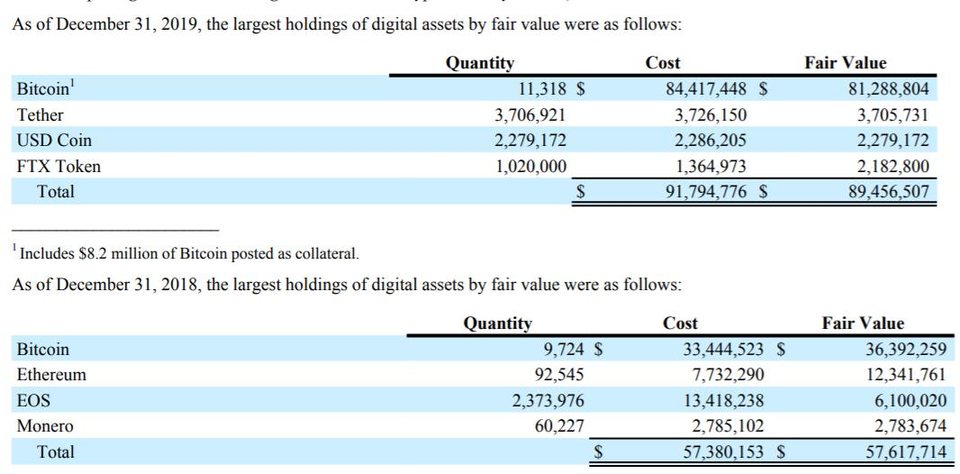
Galaxy Digital’s Cryptocurrency Holdings – 2019 Annual Report
Galaxy Digital's latest financial report reveals that over the past year, the firm has exited its positions in Ethereum (ETH), EOS, and Monero (XMR). Its current holdings consist solely of Bitcoin (BTC), FTX Token (FTT), and some stablecoins. As of year-end 2019, the average cost basis for its BTC was around $7,400. At today's Bitcoin price, this position is sitting at a slight unrealized loss.
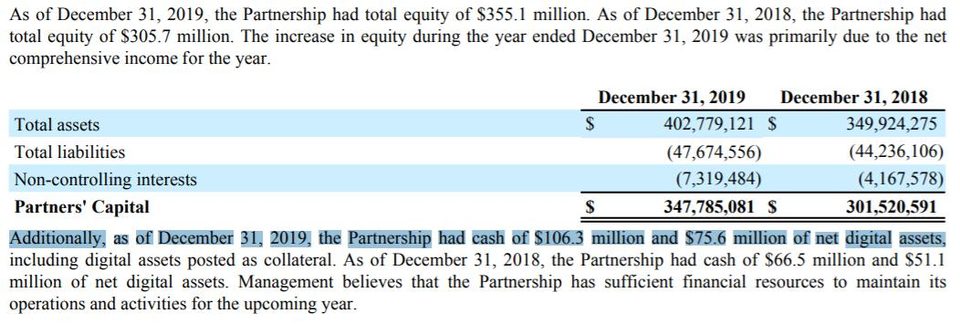
Galaxy Digital's Cash Reserves – 2019 Financial Report
The report also shows that Galaxy Digital's cash position is far from strong. It held $106 million in cash reserves at the end of 2019. With annual operating expenses running at $80 million, that runway lasts only about 16 months.
Four months of 2020 have already passed. This means the company faces a serious test over the coming year—unless the crypto markets stage a major rally.

Mike Novogratz Interviewed by CNBC
In a CNBC interview on April 2, CEO Mike Novogratz made a telling remark: "This is the year of Bitcoin. If we don't see a big rally by the end of the year, I might have to take a step back."
That statement carries a new weight today. With Bitcoin's halving on the horizon, the entire industry is under a critical stress test. From elite Goldman Sachs bankers to miners operating in remote regions worldwide, everyone is forced to confront and search for Bitcoin's fundamental value.