

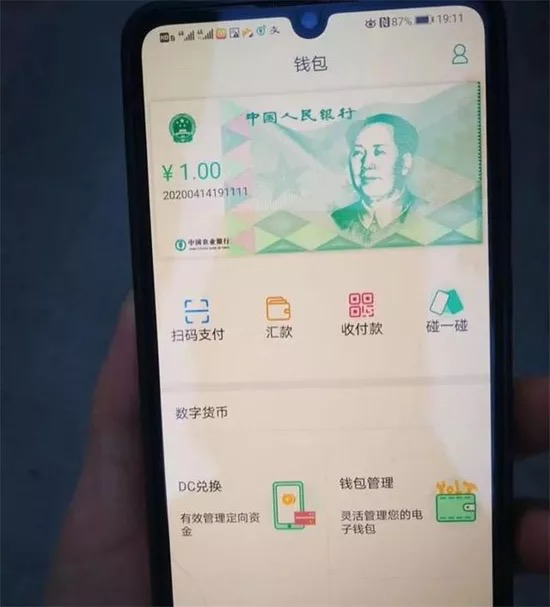
On April 14, a screenshot from an internal test version of China's central bank digital currency (CBDC), known as DC/EP (Digital Currency Electronic Payment), went viral on WeChat Moments. The accompanying message claimed that DC/EP would first undergo pilot testing in four cities: Shenzhen, Xiong'an, Chengdu, and Suzhou. Starting this month, salaries and subsidies for some government bodies and public institutions in these areas would reportedly be issued using the new digital currency.
The long-awaited DC/EP appears to be one step closer to becoming a reality.
Why the PBOC is Developing DC/EP: Addressing the Shortcomings of Traditional Money
The People's Bank of China (PBOC) established a dedicated digital currency research team as early as 2014. Then, on March 9, 2018, former PBOC Governor Zhou Xiaochuan confirmed during a press conference at the First Session of the 13th National People's Congress that the central bank was developing a digital version of legal tender—and revealed its official name: DC/EP.
Why has the PBOC invested such significant resources into DC/EP? The primary motivation is to address several inherent flaws in the current monetary system. These shortcomings can be summarized as follows:
First, high costs. Physical cash requires substantial expenditure for production, transportation, and storage. Its circulation also demands significant resources for anti-counterfeiting measures, making the overall system expensive to maintain.
Second, poor traceability. Once physical currency enters circulation, it becomes extremely difficult to track. This limits the central bank's ability to formulate targeted monetary policies or adjust the money supply based on real-time data.
Third, homogeneity. Monetary policy can only control the aggregate money supply, making it difficult to establish a direct, clear link between policy actions and the actual issuance of money.
Fourth, real-time settlement. Traditional cash transactions settle instantly. Consequently, the central bank can only exert control at the precise moment of a transaction. Once money is supplied, the central bank loses direct oversight.
A digital legal tender can effectively address all these deficiencies, which is the core reason behind the PBOC's push to develop DC/EP.
It's worth noting that beyond fixing these fundamental flaws, the PBOC's decision to accelerate DC/EP testing at this juncture carries deeper strategic significance.
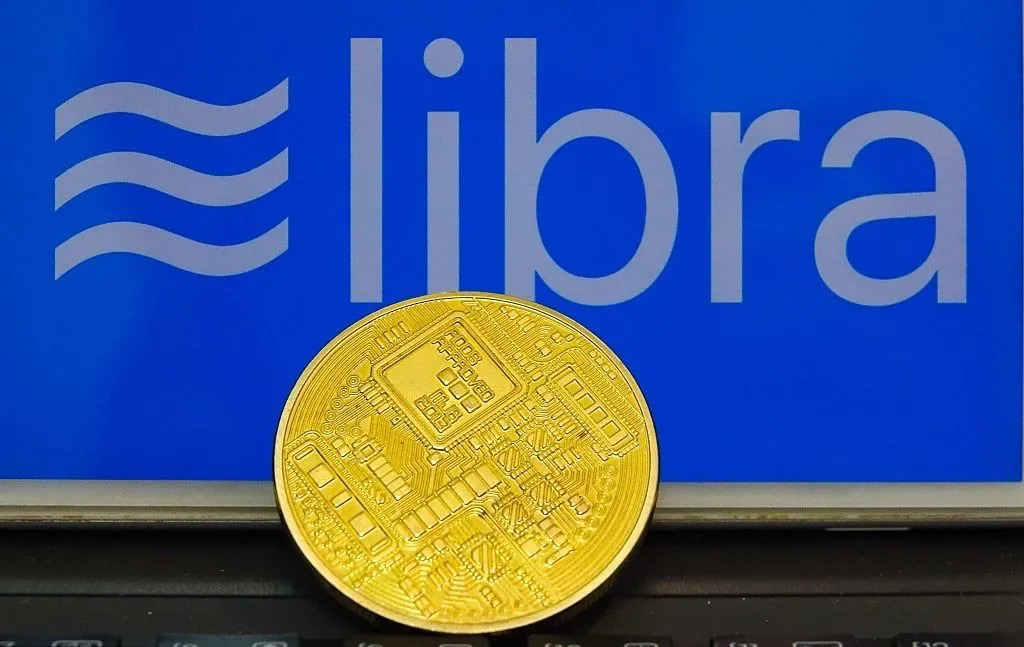
On one hand, with the maturation of blockchain technology, cryptocurrencies like Bitcoin and projects like Libra have emerged, presenting a potential challenge to existing financial systems. DC/EP can help mitigate such risks.
On the other hand, governments worldwide are seeking precise ways to distribute subsidies to businesses and individuals to counter the economic impact of COVID-19. Achieving this precision with traditional money is difficult. Since DC/EP solves issues of traceability, homogeneity, and settlement control, it can make policy implementation far more accurate and effective.
The Dual Nature of DC/EP: Currency and Payment Tool
As former PBOC Governor Zhou Xiaochuan explained, DC/EP serves two complementary functions: it is both a digital currency and a payment instrument.
From a user experience perspective, DC/EP as a "payment instrument" may feel similar to using third-party platforms like Alipay. However, it introduces new features, such as "tap-to-pay" contactless transactions that can work offline.
Despite this surface similarity, DC/EP is fundamentally different from Alipay.
DC/EP corresponds to M0—the monetary base representing cash in circulation—and holds the same legal status as physical banknotes. In contrast, the funds in a third-party payment account are classified under M2. When users pay via apps like Alipay, they first transfer money into the payment provider's account, which then facilitates the transaction.
This core distinction leads to key practical differences. First, DC/EP is legal tender, meaning it must be accepted for settling debts. Second, while third-party payment platforms have full visibility into all transaction data, DC/EP can support conditional anonymity for users.
Based on available information, the PBOC—at least at the central bank level—will not use blockchain technology. The main reason lies in DC/EP's different nature and purpose compared to cryptocurrencies. Digital currencies like Bitcoin rely on blockchain to achieve distributed consensus and establish credibility.
In contrast, as sovereign legal tender, DC/EP is backed by state credit, making a consensus mechanism unnecessary. Furthermore, current blockchain technology remains relatively inefficient. For example, every Bitcoin transaction requires network-wide verification, which is time-consuming and unsuitable for large-scale, high-frequency payments.
Operationally, DC/EP is expected to build upon the existing monetary infrastructure, adopting a "one coin, two repositories, three centers" architecture.
"One coin" refers to an encrypted digital string representing a specific monetary value, issued and digitally signed by the central bank. "Two repositories" are the PBOC's issuance vault and commercial banks' reserve vaults, complemented by digital wallets held by individuals and entities. "Three centers" comprise the authentication center, registration center, and big-data analytics center.
Under this framework, DC/EP will primarily change how money is transported and stored, while most other operational aspects will remain similar to the current system.
The Four-Fold Impact of DC/EP
What impact will the issuance of DC/EP have? We can examine its effects across four dimensions: user experience, market structure, macroeconomic policy, and international finance.
For end-users, DC/EP is unlikely to be disruptive. Although, as noted, it is fundamentally different from the balances in Alipay or WeChat Pay, the day-to-day experience will feel largely familiar.
That said, users may benefit from functional improvements, such as guaranteed acceptance by merchants, offline transaction capability, and enhanced privacy protections.
At the market level, the rollout of DC/EP could reshape the existing payment ecosystem and affect financial institutions. This may trigger industry consolidation and a structural reorganization of the entire sector.
On a macroeconomic level, DC/EP will empower the PBOC to formulate and implement monetary policy with greater precision. By leveraging big-data analytics, the central bank can track money flows and monitor supply-demand dynamics in real time, enabling more accurate and timely interventions. During crises like the current pandemic, this capability will significantly improve the execution of economic relief policies.
Internationally, the launch of DC/EP helps China better respond to challenges from foreign digital currencies like Libra while also promoting the internationalization of the RMB. However, based on current plans, DC/EP will initially be deployed domestically, meaning these broader international benefits may take time to materialize.
Chen Yongwei (Head of Research, Comparative Magazine)
Editor: Li Biying Proofreader: He Yan