
Produced by Starlabs Consulting
On June 30, 2025, the Monetary Authority of Singapore (MAS) will enact new regulations for Digital Token Service Providers (DTSPs). Dubbed “cliff-edge regulation” by the industry, these rules require local cryptocurrency exchanges and related service providers to obtain licenses. Consequently, a significant number of unlicensed entities may be forced to exit Singapore. For these so-called “Singapore exiles,” Dubai and Abu Dhabi in the United Arab Emirates (UAE) have emerged as key safe havens.
With its clear regulatory framework and innovation-friendly policies, the UAE is fast becoming the “Wall Street of Cryptocurrency.” Major international Web3 companies—including Binance, Crypto.com, OKX, Bybit, Kraken, and Ripple—have already established a presence there. Dubai alone is home to over 1,000 cryptocurrency-related businesses.
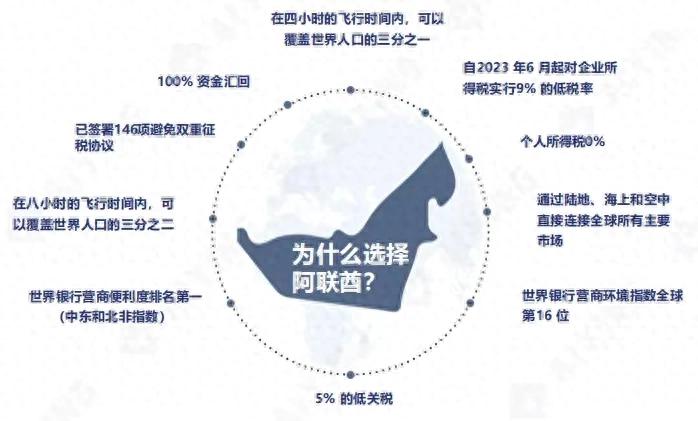
Figure 1: The UAE’s numerous advantages as a business and investment destination. Source: AIYING
The UAE Dirham’s long-standing peg to the US dollar (approximately 1 USD = 3.67 AED) has also attracted substantial international capital, particularly from high-net-worth individuals in regions like Russia and Iran. According to Chainalysis, between July 2023 and June 2024, the UAE received over $30 billion in cryptocurrency inflows, ranking it as the third-largest cryptocurrency economy in the Middle East and North Africa (MENA) region, behind only Turkey and Morocco. Furthermore, the UAE boasts the world’s highest cryptocurrency adoption rate. Data from Triple A shows that in 2024, over 25% of the UAE population owned cryptocurrency, compared to a global average of just 6.9%.
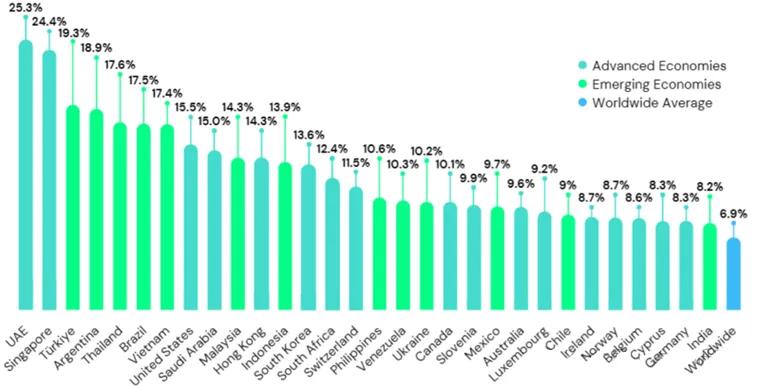
Figure 2: The UAE has the world’s highest cryptocurrency ownership rate.
However, the UAE's unique federal structure creates a relatively complex regulatory landscape. In this edition of “Global Policy,” Starlabs Consulting outlines the key regulatory frameworks to serve as a guide for Web3 entrepreneurs looking to expand into the UAE.
The UAE’s Unique Federal System
The UAE is a federation of seven emirates: Abu Dhabi, Dubai, Sharjah, Ajman, Umm Al Quwain, Ras Al Khaimah, and Fujairah. Each emirate is ruled by its own royal family and maintains a significant degree of autonomy.
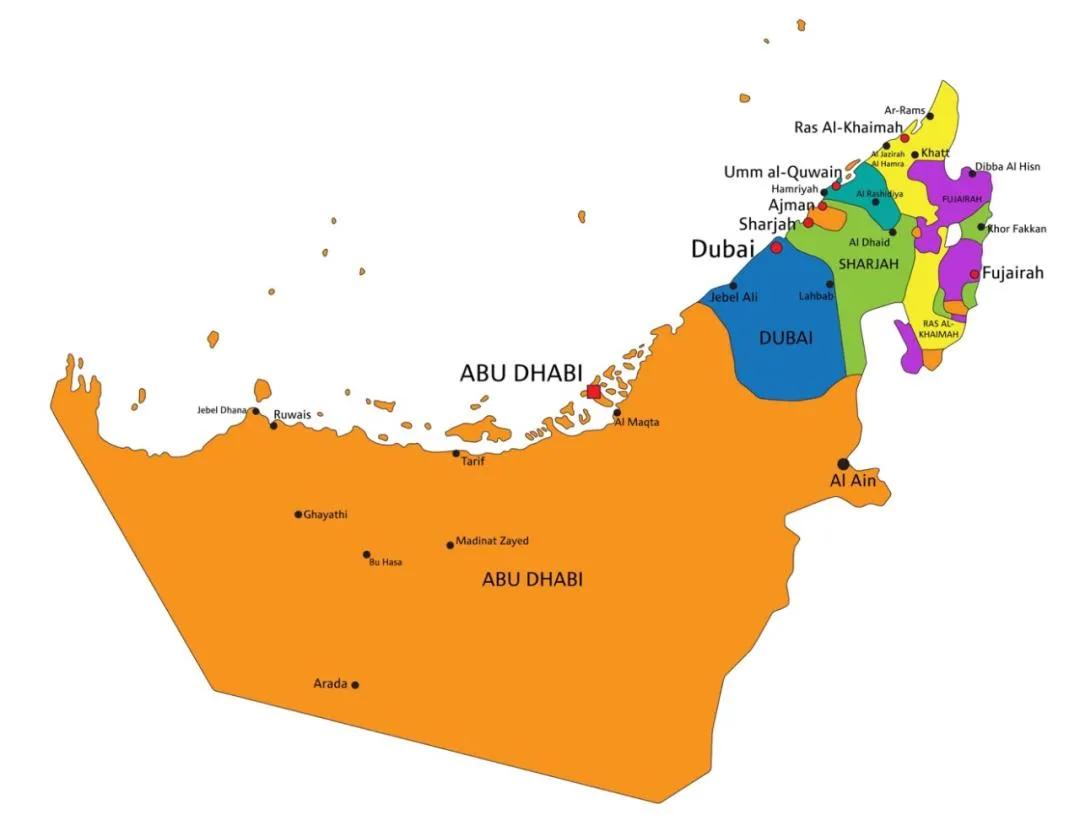
Figure 3: Distribution of the UAE’s emirates and their major cities
Economically, the capital emirate of Abu Dhabi and the commercial hub of Dubai together account for roughly 80% of the UAE's GDP. Both have established major financial free zones. Abu Dhabi hosts the Abu Dhabi Global Market (ADGM), while Dubai is home to several, including the Dubai International Financial Centre (DIFC), Dubai Multi Commodities Centre (DMCC), Dubai World Trade Centre (DWTC), and Dubai Airport Freezone Authority (RAKEZ). Additionally, Ras Al Khaimah has launched the Ras Al Khaimah Digital Assets Oasis (RAKDAO).
Consequently, the UAE's crypto asset regulatory framework spans multiple jurisdictions, each overseen by its own dedicated authority. Certain free economic zones also have their own specific rules, creating a unique, multi-layered system operating at federal, emirate, and local levels.
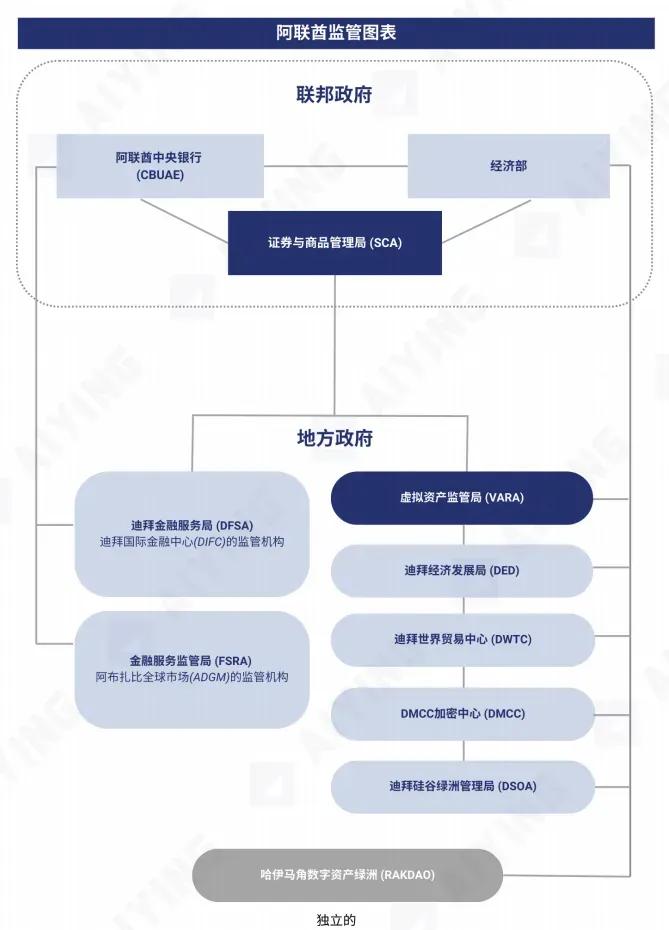
Figure 4: UAE’s Virtual Asset Regulatory Framework. Source: AIYING
1. Regulatory Authorities
Federal Level: The Central Bank of the UAE (CBUAE) regulates crypto payments, while the Securities and Commodities Authority (SCA) oversees investment-related crypto assets and handles licensing.
Dubai (excluding DIFC): Falls under the Virtual Assets Regulatory Authority (VARA), which is the licensing body.
Dubai International Financial Centre (DIFC): Regulated by the Dubai Financial Services Authority (DFSA), which maintains its own independent crypto policy.
Dubai Multi Commodities Centre (DMCC): Also regulated by VARA, but issues its own independent licenses.
Abu Dhabi Global Market (ADGM): Overseen by the Financial Services Regulatory Authority (FSRA), which also operates under an independent crypto regulatory policy.
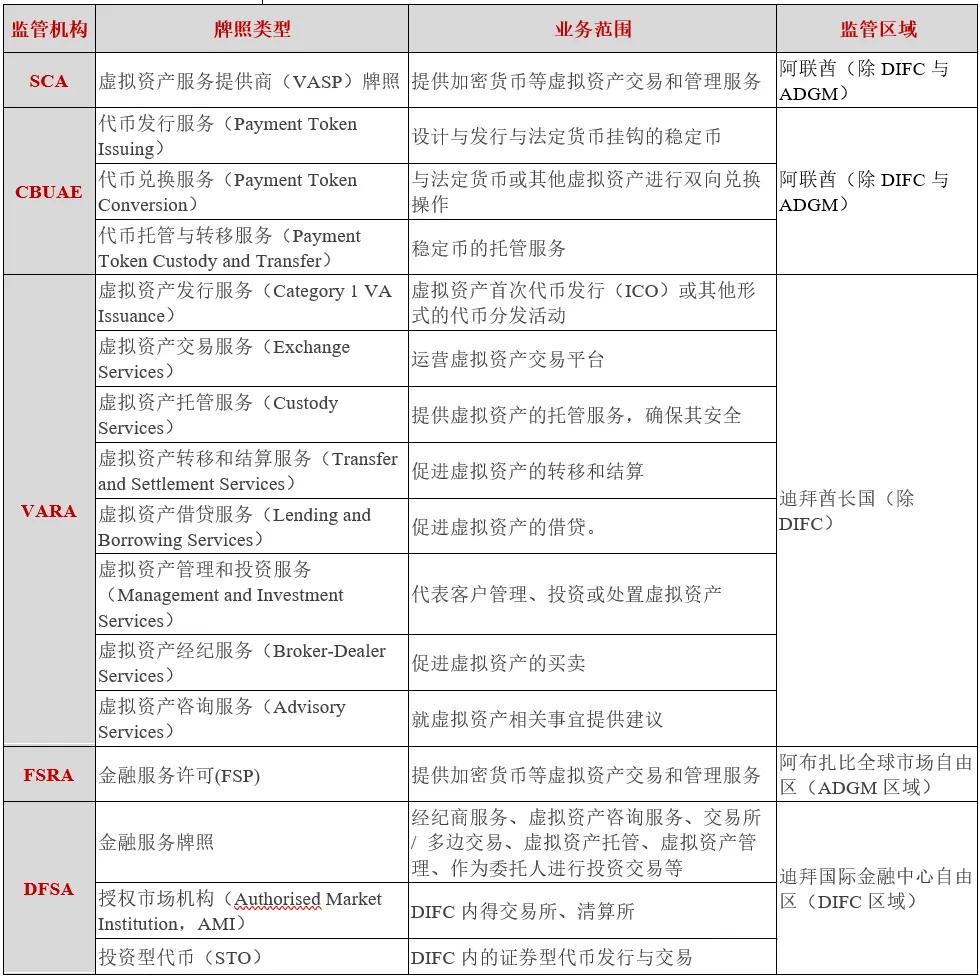
Figure 5: License Types, Regulatory Scope, and Jurisdictional Coverage of Different UAE Regulatory Authorities. Source: WeChat Official Account “Taihui Research”
2. Regulatory Basis
Currently, the UAE's provision of virtual asset services is governed by five main regulatory frameworks, which include:
The Federal Regulation on virtual assets, issued under Cabinet Resolution No. 111;
Regulations that apply across the Emirate of Dubai (excluding the DIFC), overseen by the newly established Dubai Virtual Assets Regulatory Authority (VARA).
Dubai Multi Commodities Centre (DMCC) free zone’s licensing framework for crypto-related businesses.
Regulations from two major financial free zones: the Dubai International Financial Centre (DIFC) and the Abu Dhabi Global Market (ADGM).
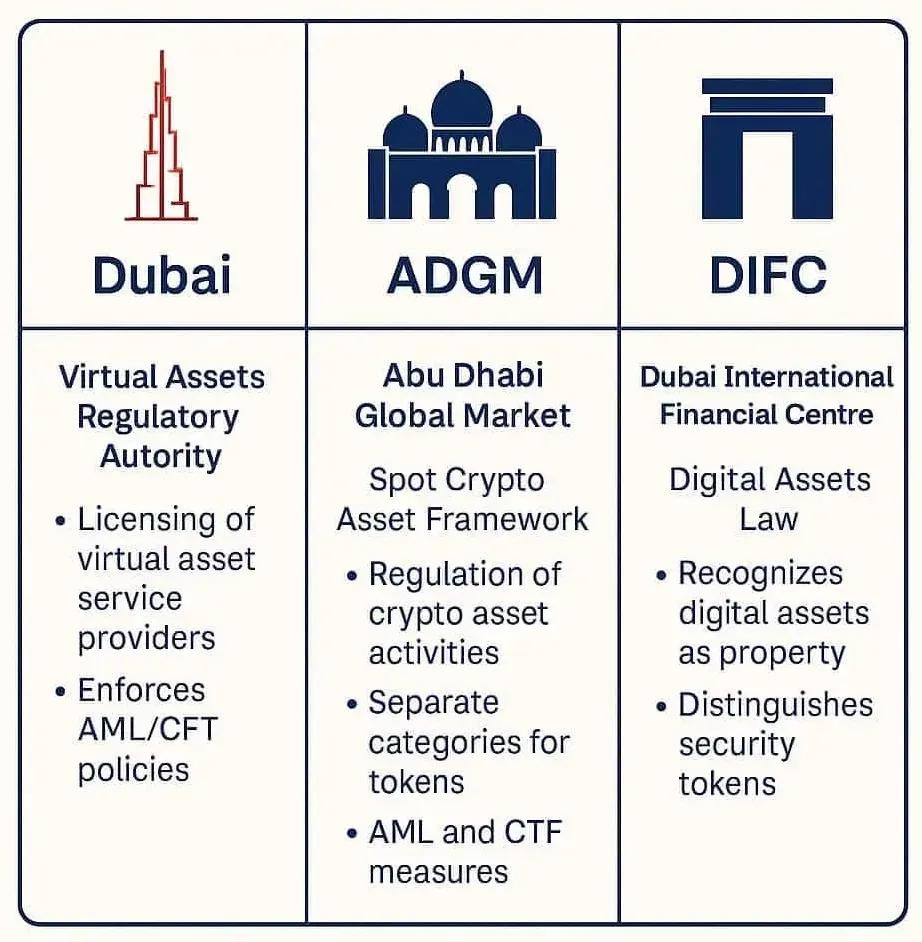
Figure 6: Regulatory Comparison among Dubai VARA, Abu Dhabi ADGM, and Dubai DIFC. Source: AIYING
Other local regulations include those from the Dubai Department of Economic Development (DED), which governs virtual asset activities in Dubai, and the Abu Dhabi Department of Economic Development (ADDED), which sets rules and licensing requirements for such activities in Abu Dhabi.
Federal-Level Regulatory Framework
1. SCA Regulates Crypto Assets as Securities
The Securities and Commodities Authority (SCA) is empowered to regulate crypto asset activities across the UAE mainland and certain free zones (excluding ADGM and DIFC).
In 2023, the SCA issued its “Regulatory Guidance on Virtual Assets and Virtual Asset Service Providers,” which governs the use of virtual assets (VAs) and the activities of virtual asset service providers (VASPs). This guidance categorizes virtual assets into two types:
Virtual assets used for investment purposes, which fall under SCA regulation—though digital securities and non-investment NFTs are outside the SCA's scope;
Virtual assets used for payment purposes, which are regulated by the Central Bank of the UAE (CBUAE), unless the CBUAE explicitly authorizes their use for investment.
The SCA mandates that the following activities involving virtual assets require a license:
Operating and managing virtual asset platforms
Providing virtual asset exchange services
Providing virtual asset transfer services
Brokerage services for virtual asset trading
Custody and management of virtual assets
Financial services related to virtual asset issuance
The SCA has set specific licensing and capital requirements for the following activities:
Virtual Asset Platform Operator: A minimum paid-up capital of AED 1 million for platform operation only, or AED 5 million if offering additional virtual asset services. Both must maintain six months' worth of operating funds.
Virtual Asset Custodian: Minimum paid-up capital of AED 4 million, plus six months' operating funds.
Virtual Asset Financial Advisor: Minimum paid-up capital of AED 500,000, plus six months' operating funds.
Virtual Asset Portfolio Manager: Minimum paid-up capital of AED 3 million.
Virtual Asset Broker: Minimum paid-up capital of AED 2 million.
Virtual Asset Dealer: Minimum paid-up capital of AED 30 million.
Furthermore, virtual asset trading platforms are treated as Multilateral Trading Facilities (MTFs), subjecting them to regulatory standards similar to those in traditional finance.
2. CBUAE Regulates Payment Tokens and Stablecoins under Payment Instrument Framework
In June 2024, the Central Bank of the UAE (CBUAE) issued the Payment Token Services Regulation (PTSR), which treats stablecoins as payment instruments. Crucially, it only permits stablecoins pegged to the UAE Dirham. This means foreign-currency-pegged stablecoins like USDT or USDC are not recognized for payments.
This regulation applies across the entire UAE, including all free zones, with the exception of the DIFC and ADGM. It governs key activities involving payment tokens—such as issuance, conversion, custody, and transfer—collectively known as "Payment Token Services."
Under the rules, any individual or entity offering Payment Token Services within the UAE—or targeting users in the country—must secure either a license (for AED-denominated services) or registration (for foreign services) from the CBUAE. Licenses are reserved for companies incorporated in the UAE (outside financial free zones). Entities not incorporated in the UAE but operating there, including those within the DIFC and ADGM, may apply for registration as foreign Payment Token Issuers.
The regulation imposes strict licensing and compliance requirements on stablecoin issuers, covering capital adequacy, transparency, and anti-money laundering (AML) and counter-terrorist financing (CFT) obligations. The capital requirements are as follows:
Payment Token Issuers: Must maintain initial and ongoing capital of AED 15 million, plus additional ongoing capital equal to at least 0.5% of the fiat face value of outstanding payment tokens. Issuers are required to ensure full asset backing and undergo regular third-party audits.
Payment Token Custodians, Transferors, and Conversion Service Providers: Face regulatory capital thresholds of either AED 3 million or AED 1.5 million, depending on whether their average monthly payment token transfer value exceeds or falls below AED 10 million.
Progress on AED-Pegged Stablecoins:
In August 2023, Tether, the issuer of USDT, announced a partnership with Abu Dhabi-listed Phoenix Group (PHX) to launch an AED-pegged stablecoin.
In October 2024, the CBUAE approved AE Coin—a dirham-backed stablecoin launched by local firm AED Stablecoin LLC.
In May 2025, Abu Dhabi’s sovereign wealth fund ADQ, First Abu Dhabi Bank (FAB), and International Holding Company (IHC)—the Gulf's second-largest publicly traded company—announced a joint initiative to launch an AED-pegged stablecoin, pending CBUAE approval.
✨ Starlabs Consulting Note: According to Chainalysis data, retail transactions account for 93% of stablecoin volume in the UAE.
3. Tax Incentives: VAT Exemption
Individual Investors: No capital gains or income tax on cryptocurrency investments.
Corporate Taxation: Starting in 2023, the UAE introduced a 9% corporate tax for businesses (exempting companies with taxable income below AED 375,000), which also applies to cryptocurrency-related enterprises.
VAT Exemption: As of November 15, 2024, cryptocurrency transactions—including exchanges and transfers of ownership—are exempt from Value Added Tax (VAT), retroactively effective from January 1, 2018.
Dubai Regulatory Framework: VARA + DIFC
1. Dubai International Financial Centre (DIFC): Regulated by the Dubai Financial Services Authority (DFSA)
The DIFC is an economic free zone in the UAE with its own independent tax policies and regulatory framework.
The DIFC’s Digital Assets Law, enacted in March 2024, recognizes digital assets as property under English common law principles. The DFSA oversees cryptocurrency activities within the DIFC, and crypto-related entities operating there must obtain DFSA licensing. According to Starlabs Consulting, Standard Chartered Bank and Ripple have already secured DFSA licenses.
In March 2025, the DFSA launched a tokenized regulatory sandbox for firms offering tokenized investment products and services, covering eligible offerings such as tokenized equities, bonds, sukuk, and units of collective investment funds.
Regulation in the DIFC is implemented through two key frameworks:
i. Investment Token Regime
In October 2021, the DFSA published its “Investment Token Regime,” establishing an initial regulatory framework for investment tokens—such as security tokens or derivative tokens. This regime applies to institutions involved in marketing, issuing, trading, or holding investment tokens within the DIFC, as well as authorized firms engaged in investment token-related business, including facilitating trades, using tokens for payments, and providing advisory services.
ii. Crypto Token Regime
In November 2022, the DFSA rolled out comprehensive legislation to implement its Crypto Token Regime. This framework addresses not only the anti-money laundering (AML) and counter-terrorist financing (CFT) risks linked to trading, clearing, holding, or transferring crypto tokens, but also concerns around consumer protection, market integrity, custody, and the financial stability of service providers.
Under this regime, only "Accepted Crypto Tokens" fall under regulatory oversight and are permitted for use within the DIFC. To date, the DFSA has approved five crypto tokens—BTC, ETH, LTC, TON, and XRP—along with Circle's stablecoins, USDC and EURC. All other crypto assets, including utility tokens and NFTs, are explicitly excluded from the regulatory scope.
2. Outside the DIFC: Regulation by the Virtual Assets Regulatory Authority (VARA)
Dubai's virtual asset regulatory framework is based on the Virtual Assets Regulation Law, which took effect in March 2022. This law also created a dedicated watchdog—the Virtual Assets Regulatory Authority (VARA)—to oversee virtual asset activities across Dubai, including its free zones and special development zones (excluding the DIFC), and established coordination with the Dubai World Trade Centre Authority (DWTCA). This made Dubai the world's first—and currently only—jurisdiction with a specialized virtual asset regulator.
As an autonomous body, VARA works alongside federal regulators—the Securities and Commodities Authority (SCA) and the Central Bank of the UAE (CBUAE)—to regulate virtual asset service providers (VASPs) operating outside the DIFC. This includes exchanges, venture capital funds, NFT platforms, and others, all of which require VARA's approval and licensing for their activities.
While VARA shares some similarities with the DFSA, their jurisdictions do not overlap. VARA has clearly defined eight categories of regulated virtual asset (VA) activities. Any VASP looking to offer these services must secure a license before starting operations:
-
VA Advisory Services
-
VA Brokerage Services
-
VA Custody Services
-
VA Exchange Services
-
VA Lending and Borrowing Services
-
VA Management and Investment Services
VA Transfer and Settlement Services
VA Issuance Category 1 (primarily for fiat-pegged stablecoins)
VARA's public registry shows that 35 companies have now secured VASP licenses from the regulator, including industry leaders like Binance, OKX, Crypto.com, Deribit, HashKey, and Gate.
In October 2024, VARA fined and issued cease-and-desist orders to seven unlicensed crypto entities, with penalties ranging from $13,000 to $27,000.
The following month, VARA signed a cooperation framework with the UAE Securities and Commodities Authority (SCA) to clarify their respective regulatory roles. A key outcome was that VASPs planning to operate in Dubai now only need a VARA license, which automatically registers them with the SCA to serve the broader UAE market.
VARA also mandated that all firms promoting digital asset investments include prominent risk disclosures in their marketing materials, effective September 26, 2024.
These rules were further solidified in October 2024 with VARA’s “Regulations on Virtual Asset Marketing and Related Activities.” The framework strengthens oversight of marketing, advisory services, DeFi, and custody, introducing a tiered penalty system to tackle misleading promotions and exaggerated claims.
On May 19, 2025, VARA updated its rulebook to formally bring RWA tokenization under its regulatory umbrella, permitting the free secondary trading of such tokens. That same month, Dubai launched the MENA region's first licensed real estate tokenization project.
Abu Dhabi Global Market (ADGM): Regulated by the Financial Services Regulatory Authority (FSRA)
ADGM is an international financial center in Abu Dhabi. Operating as an independent economic zone, it boasts a flexible regulatory framework based on English and American common law, providing a transparent and efficient environment for business.
The FSRA, ADGM's independent regulator, issues licenses covering a range of crypto activities, including trading, custody, brokerage, and asset management.
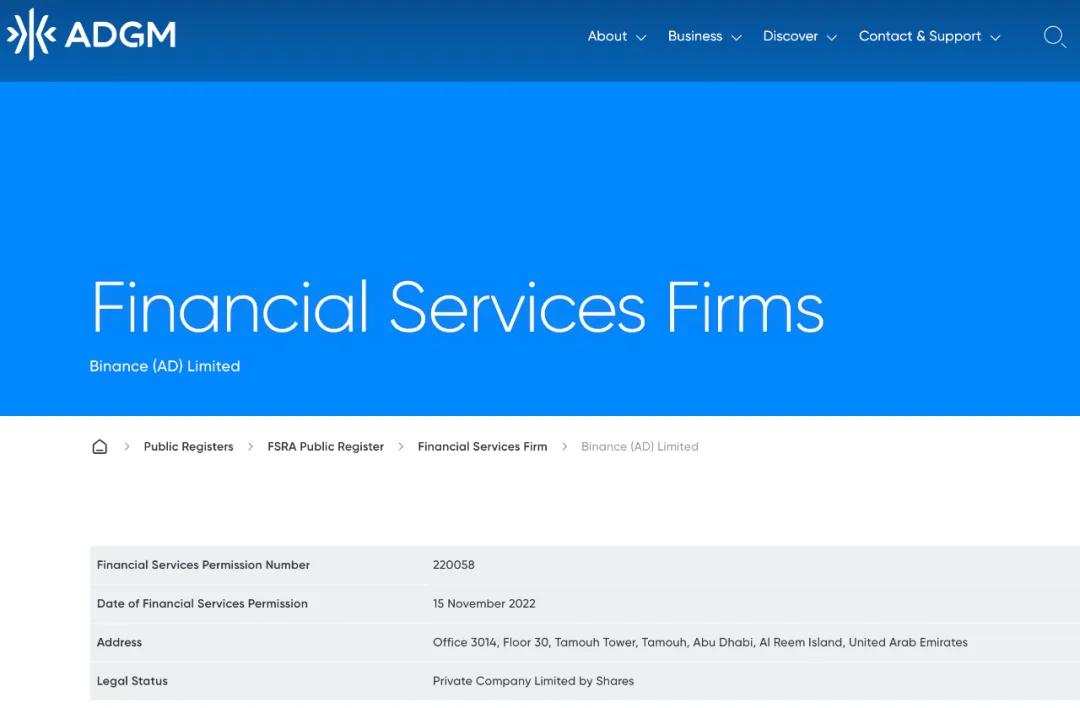
Figure 7: Binance secured a Financial Services Permission (FSP) from the FSRA in November 2022
In 2022, the FSRA published its “Guidance on the Regulation of Virtual Asset Activities,” outlining requirements for virtual asset service providers. These include capital requirements, personnel controls, and compliance with anti-money laundering (AML) and know-your-customer (KYC) protocols.
In 2023, the Abu Dhabi Global Market (ADGM) established a formal regulatory framework for decentralized autonomous organizations (DAOs) and other digital asset entities, granting DAOs legal status and the ability to issue tokens to their members.
Then in 2024, the Financial Services Regulatory Authority (FSRA) released Consultation Paper No. 7, proposing a framework for fiat-referenced tokens (FRTs). It also plans to update existing rules to allow token usage in various scenarios, such as payment and investment services.
According to Starlabs Consulting, USDT is now among the tokens accepted by ADGM. Stablecoin firms like Paxos and Circle have also received in-principle approvals (IPAs) from the FSRA. In a notable move, MGX—an Abu Dhabi-backed investment group—used stablecoins to invest $2 billion in Binance in March 2025.
Furthermore, ADGM has set up a FinTech sandbox, enabling companies to trial crypto-related products and services in a controlled setting.
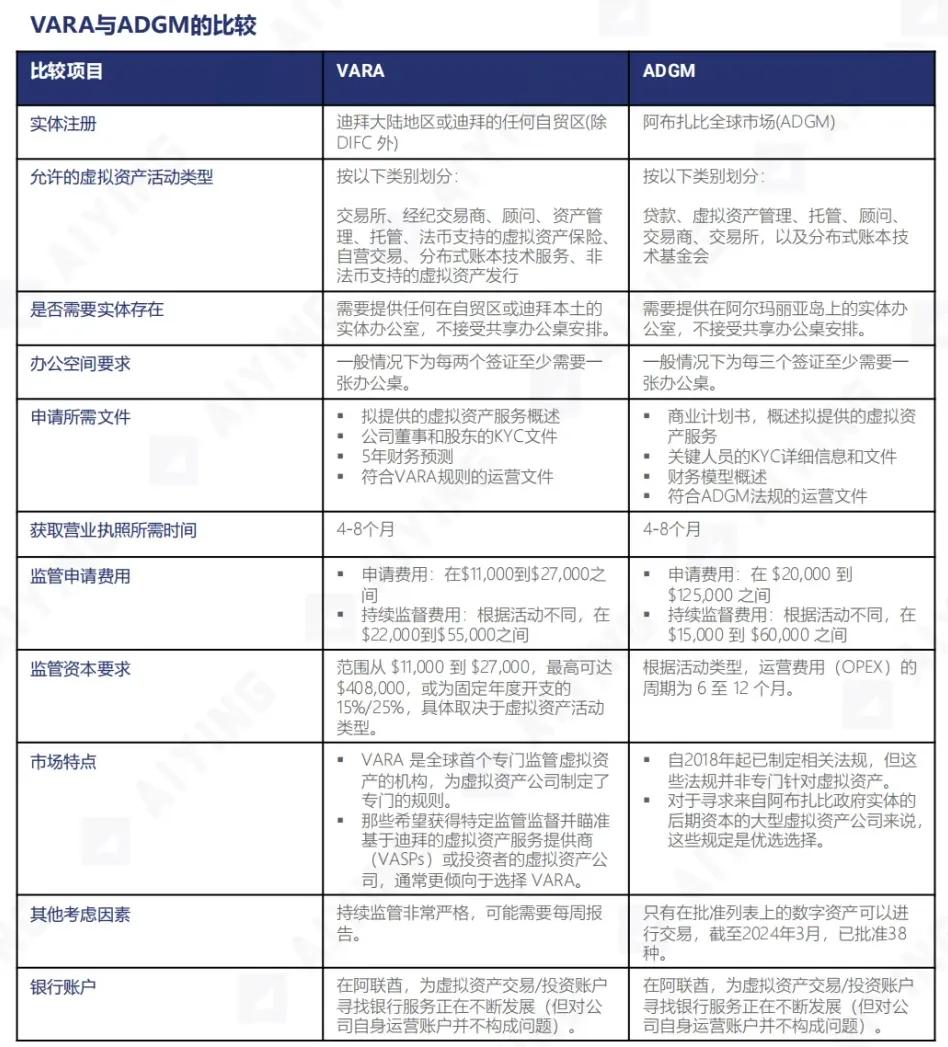
Figure 8: VARA vs. ADGM Regulatory Comparison Source: AIYING
Other Popular Free Zones
Beyond the comprehensive, regulator-led licensing regimes of ADGM and VARA, several free zones offer lower-barrier "non-regulated" virtual asset licenses. These include the Dubai Multi Commodities Centre (DMCC), Dubai World Trade Centre (DWTC), Ras Al Khaimah Economic Zone (RAKEZ), Dubai Silicon Oasis Authority (DSOA), Fujairah International Free Zone Authority (IFZA), and Ras Al Khaimah Digital Assets Oasis (RAKDAO). Each provides specific licensing options tailored to crypto businesses. While not suitable for operating exchanges, these licenses do permit a range of other activities.
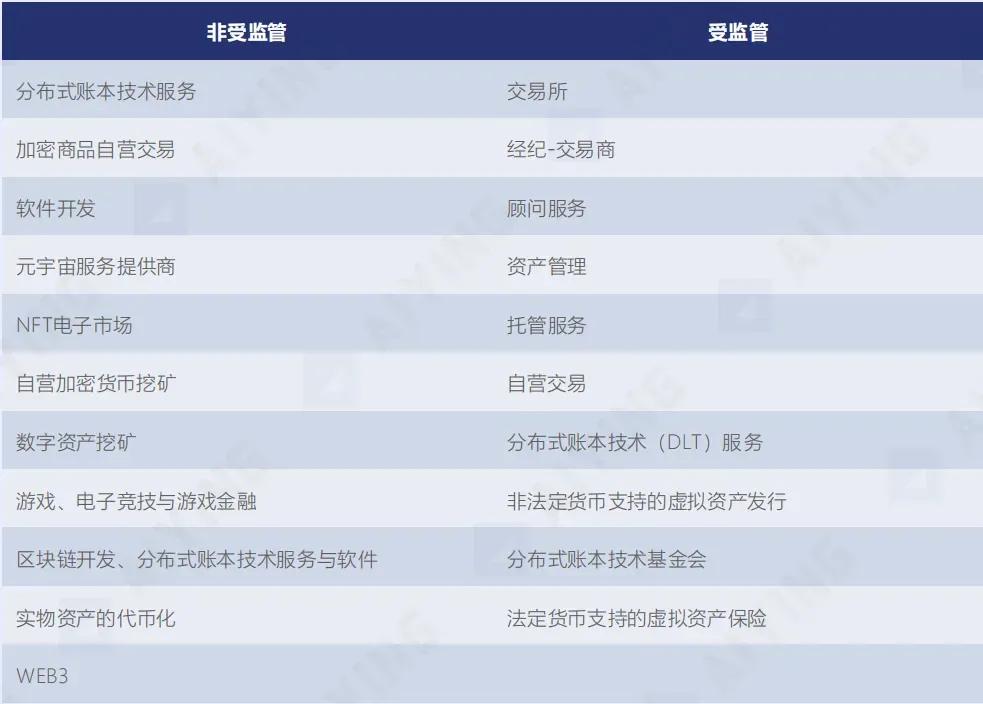
Figure 9: Business Types Under Non-Regulated vs. Regulated Licenses Source: AIYING
Among these, DWTC has become a central hub for the UAE's crypto industry and works with VARA to provide a regulatory framework. It offers 100% foreign ownership, zero personal income or capital gains tax, and no currency restrictions—making it an attractive base for crypto enterprises. Notably, Binance has partnered with the Dubai government to develop a regional cryptocurrency hub within DWTC.