

On the afternoon of June 17, 2025, the professional seminar “The Decentralized World: The Revolutionary Convergence of AI and Web3,” co-hosted by 1783DAO and BroadChain, took place during the SuperAI Summit in Singapore.
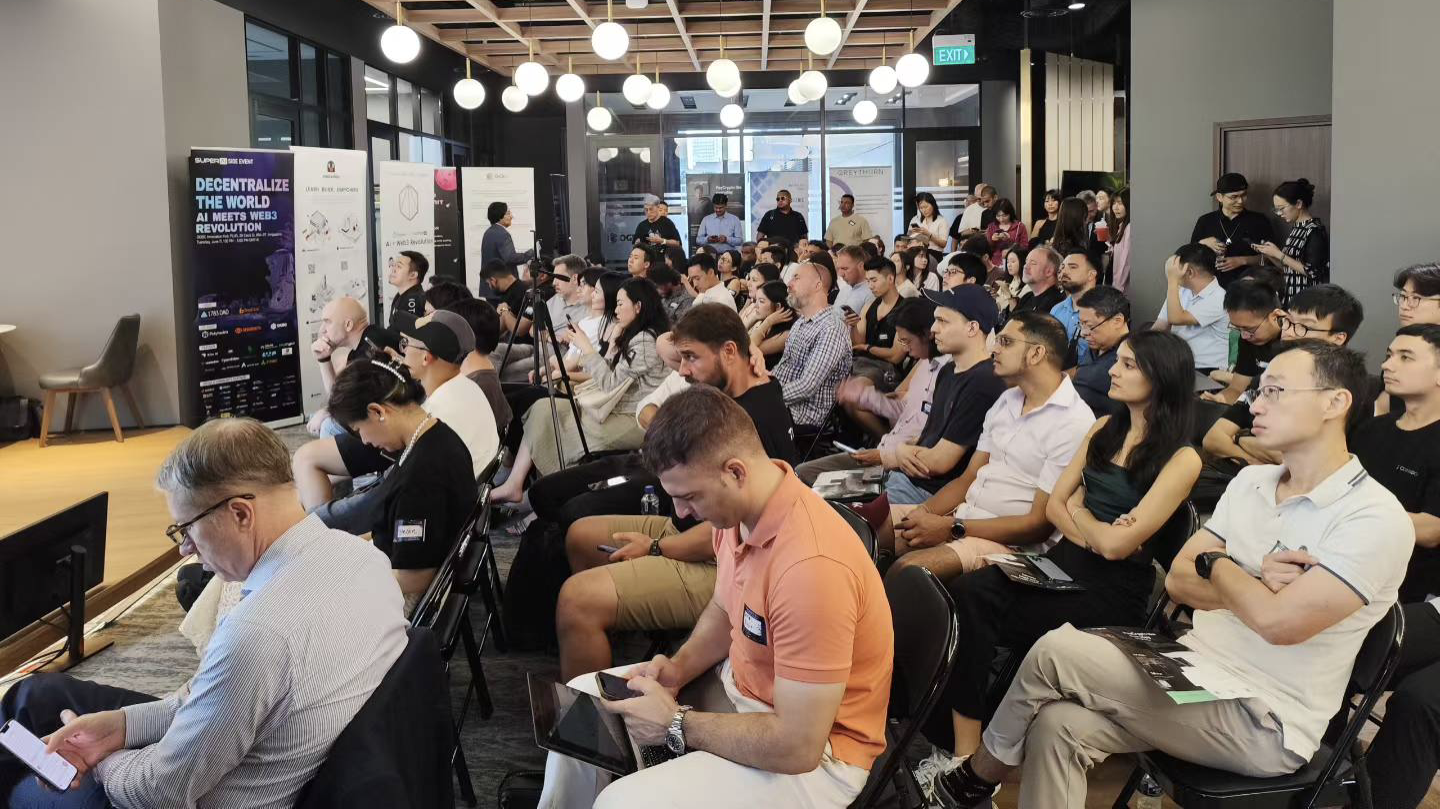
The seminar delved into cutting-edge topics such as “Verifiable Intelligence,” “On-chain Identity,” “ZKML (Zero-Knowledge Machine Learning),” “RWA,” and “AI-Driven Financial Innovation.” Through two keynote speeches and two panel discussions, it offered a comprehensive look at the latest industry breakthroughs and the future of deep integration between AI and cryptographic technologies.
[Keynote Speech I] Jiaheng Zhang: Zero-Knowledge Proofs Empower Trustworthy AI — The Trust Foundation for Web3 & AI Convergence
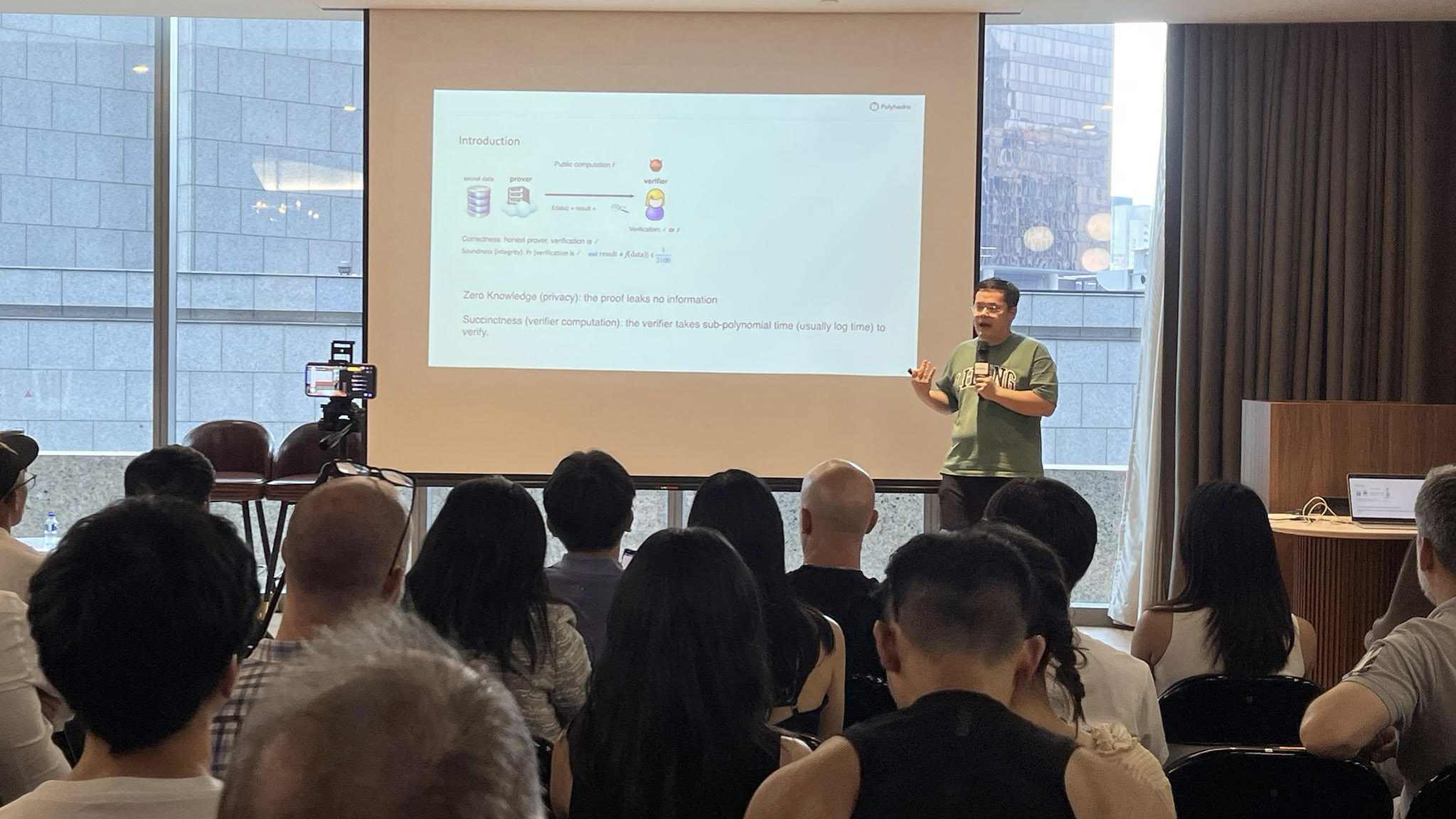
Jiaheng Zhang, Assistant Professor at the National University of Singapore and Co-Founder of Polyhedra Network, argued that as AI models grow more complex, users face challenges in verifying the authenticity, compliance, and trustworthiness of their outputs. Zero-knowledge proofs (ZKP), he noted, provide a cryptographic, "trustless" solution to this problem.
He highlighted Polyhedra’s zkML module, which allows users to verify the legitimacy of AI outputs without revealing the underlying model architecture or input data—enabling "trustworthy inference" for high-stakes fields like finance and healthcare.
“AI service providers must be accountable for their model's behavior—users shouldn't have to blindly trust them,” Zhang emphasized. Looking ahead, he sees ZKP creating an "on-chain trust loop" for auditing training data provenance, model invocation logs, and Agent behavior.
[Keynote Speech II] Anthony Cargill: AI Needs “Verifiable Intelligence”; Web3 Provides the Trust Architecture
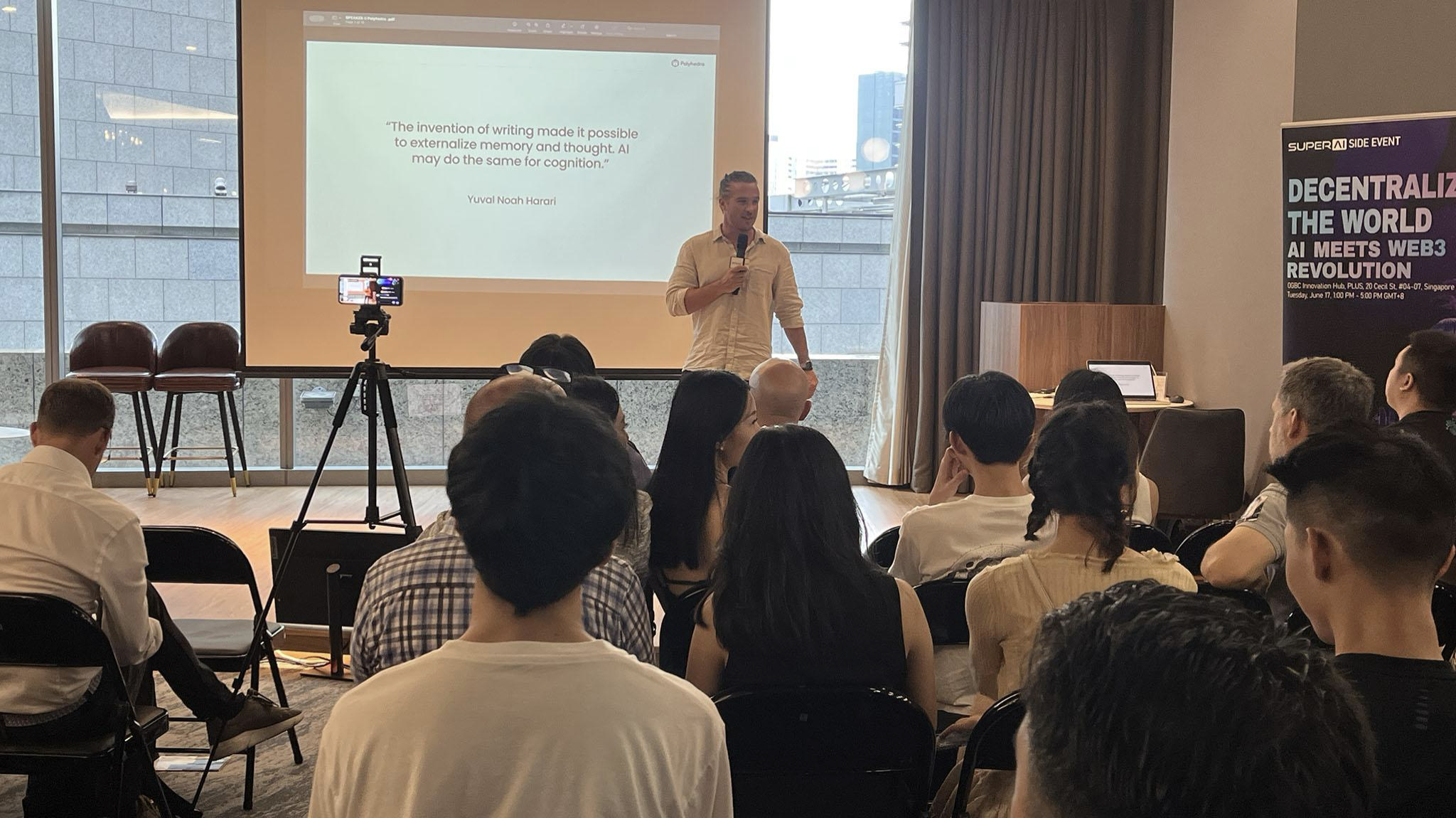
In his keynote titled “AI + Web3: The Prospects and Future of Verifiable Intelligence,” Anthony Cargill, Ecosystem Lead at Polyhedra Network, observed that while AI has permeated finance, education, and social governance, "unverifiable" AI systems carry significant risks.
“Delegation without verification is abdication,” he stressed. Polyhedra is building ZKP-based infrastructure to ensure every AI model invocation and inference can be mathematically and cryptographically verified.
Anthony further explained that Web3 provides three critical capabilities for ZKP: on-chain incentive mechanisms, auditable traces, and decentralized governance. He called on the industry to “build a future AI architecture where ‘human consensus precedes model alignment,’ ensuring technology serves trust and freedom.”
[Panel Discussion I] AI × Web3: From Semantic Stitching to Foundational Integration
Moderated by Allan, Founder of Moledao, the first panel on “AI and Web3: Integration and the Future” explored AI Agents, on-chain identity, and trusted data mechanisms.
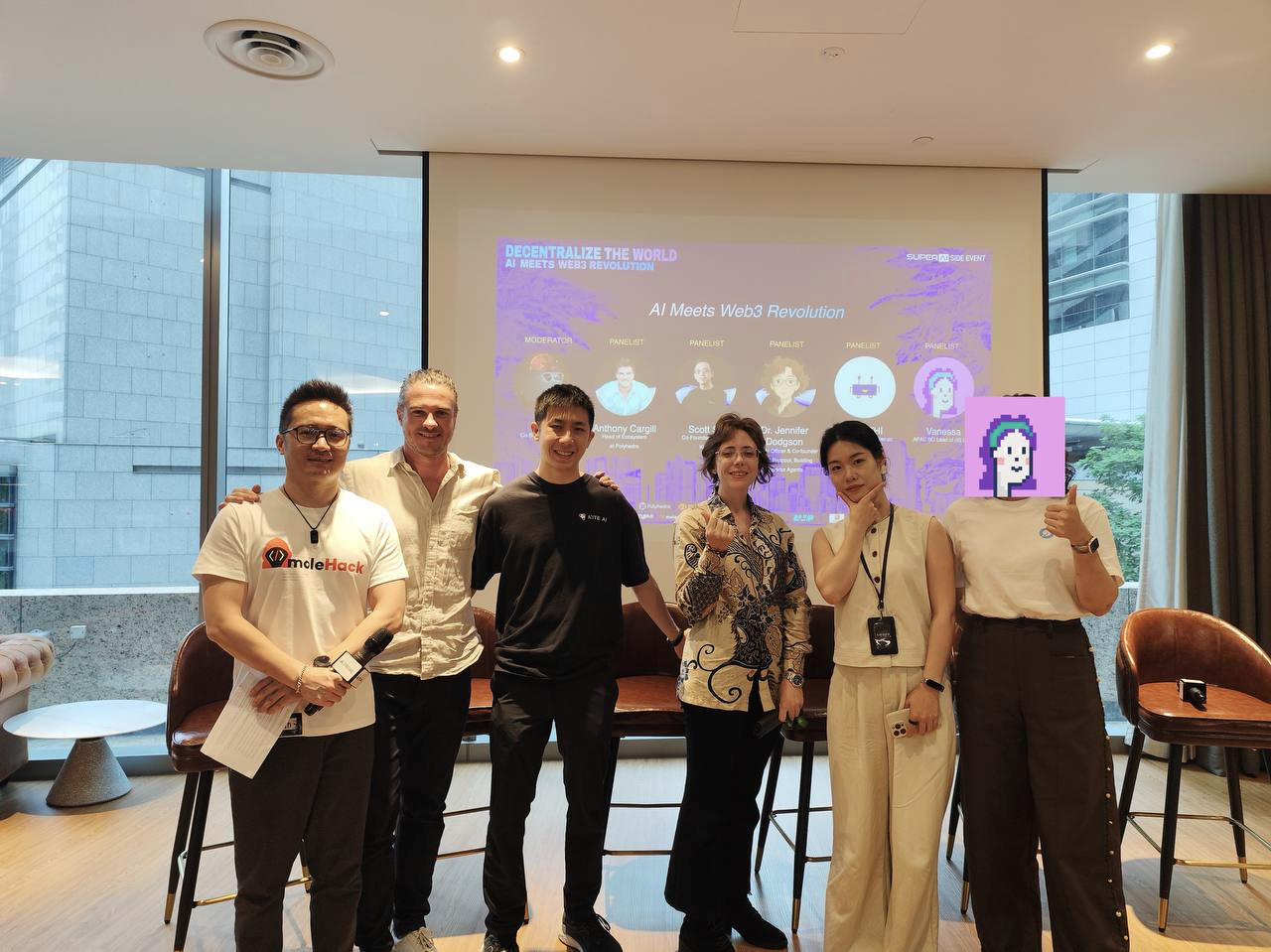
Anthony Cargill emphasized that “verifiability” is the core architectural principle for AI and Web3 convergence. He argued that AI must avoid becoming another black-box system, instead leveraging Web3's incentives, governance, and cryptographic guarantees for open collaboration and security. “Verifiable Intelligence,” he said, will be the design foundation for future AI—a shift in both technology and trust mechanisms.
Henry Lee, CMO of KITE AI, stated that without Web3's transparency and programmable logic, AI remains merely “an extension of centralized services.” He noted that AI's intelligence must be institutionalized; otherwise, it resembles an unregulated super-user rather than reliable infrastructure. “Web3 provides the mechanisms to establish incentives, constraints, and trust boundaries for AI—it's not just about slapping tokens on a black box.”
Dr. Jennifer Dodgson, Co-Founder and Chief AI Officer of KIP Protocol, focused on data governance, arguing that on-chain identity and data sovereignty are prerequisites for individuals to control AI services. She observed a natural synergy between Web3's token mechanisms and AI's intelligent interactions, paving the way for “every individual having their own on-chain AI economy.” She also highlighted the importance of diverse perspectives, including women's, in technical governance.
SANZHI, Ecosystem Lead at amber.ac, pointed out that Web3's high knowledge barrier—with concepts like wallets, smart contracts, and DAOs—remains daunting for ordinary users. “AI is an accelerator for education; Web3 is the path to assetizing educational outcomes,” she said. By recording and incentivizing learning achievements on-chain, AI can help monetize knowledge, not just improve cognitive efficiency.
Vanessa, APAC Growth Lead at 0G Labs, noted that large language models (LLMs) and AI applications are becoming key workloads for Web3, but traditional blockchains are ill-suited for real-time data interaction and large-scale computation.
The panelists agreed that AI and Web3 integration must move beyond “keyword stacking” to achieve verifiability and participatory design at both the infrastructure and mechanism levels.
On Asia's advantages, they highlighted the regulatory flexibility, entrepreneurial energy, and policy transparency in hubs like Singapore and Hong Kong as ideal grounds for Web3 and AI experimentation.
Looking to 2030, the panelists outlined concrete goals including “decentralized open-source LLMs,” “individual ownership of AI assistant economic rights,” and “on-chain data asset markets,” reflecting shared expectations for the AI × Web3 transformation at both individual and systemic levels.
[Panel Discussion II] RWA, PayFi, and Quantitative AI: Real-World Crypto Adoption
The second panel, moderated by Xinyi, Ambassador of Moledao, focused on practical applications of AI, RWA, PayFi, and intelligent quantitative trading bots.
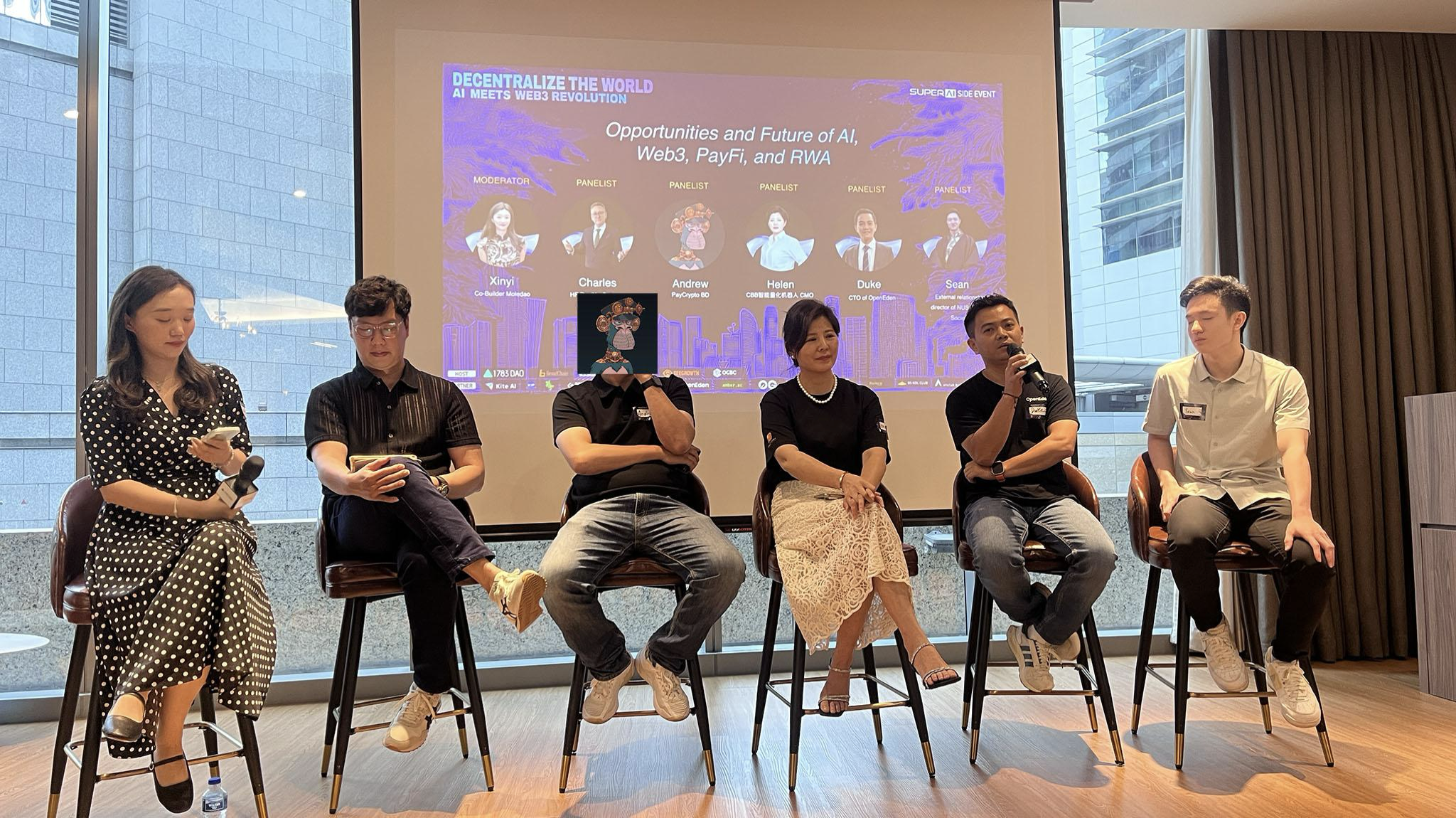
Alan from HF RealX proposed that “gold is one of the most suitable assets for RWA tokenization,” citing its global liquidity, transparent central bank holdings, low volatility, and auditability. He systematically compared RWA regulatory frameworks in Singapore, Hong Kong, Abu Dhabi, and the United States.
Andrew from PayCrypto pointed out that “AI Agent + crypto card + stablecoin” will create a closed-loop on-chain payment scenario and introduced “Know Your Agent” (KYA) as a potential new regulatory paradigm.
Helen from CBB explained how quantitative trading bots navigate market cycles by hedging risk. Using strategies like trend-following grid trading and automated profit-taking, their platform currently safeguards over $300 million in custodial assets.
Duke, CTO of OpenEden, highlighted that regulated assets like U.S. Treasuries are prime candidates for tokenization. His team has integrated audit and on-chain verification mechanisms directly into their RWA product's architecture.
Sean from the National University of Singapore offered an educator's perspective: "AI + Web3 presents both challenges and breakthrough opportunities for young entrepreneurs. The goal isn't to build a perfect project from day one, but to foster capability growth and integrate into the right community."
AI × Web3: Beyond the Buzzword, a New Paradigm
From crypto payments to on-chain governance, and from AI Agents to RWAs, the event—co-organized by 1783DAO and BroadChain—highlighted a clear trend: AI and Web3 are no longer operating in isolation. Instead, they are converging to empower each other, laying the groundwork for a "verifiable, intelligent future society."
The future demands AI that is not only "intelligent" but also "trustworthy," and Web3 that is not just "decentralized" but also "verifiable by consensus."
On Singapore's fertile ground—known for its regulatory agility and vibrant innovation—a quiet revolution is underway. The convergence of AI and Web3 is taking off, reshaping technology, assets, and societal infrastructure.
Event Background
The seminar, "Decentralized World: The Revolutionary Convergence of AI and Web3," was co-hosted by 1783DAO and BroadChain Finance. As a highly anticipated side event of SuperAI 2025—Asia's largest AI summit—it drew an overwhelming response, attracting hundreds of core participants including global AI experts, Web3 founders, investors, and academics.
Co-organized by Polyhedra Network, SeeGrowth, and OGBC Innovation Hub, the event featured a strong lineup and tackled cutting-edge topics. Discussions delved into critical themes like "AI Agents," "on-chain identity," "ZKML (Zero-Knowledge Machine Learning)," "RWA," and "AI-driven on-chain governance."
The event also enjoyed broad support from leading Web3 and AI innovators, including Moledao, KITE AI, KIP Protocol, amber.ac, 0G Labs, OpenEden, LOOP SPACE, HF RealX, PayCrypto, CBB Intelligent Quantitative Trading Bots, Singapore Uni DAO, and the NUS FinTech Society. This collective involvement underscores that the AI and Web3 convergence is now a central theme capturing global technological and industrial attention.